


Why the Mattress That Came With Your Hospital Bed Probably Isn't Enough
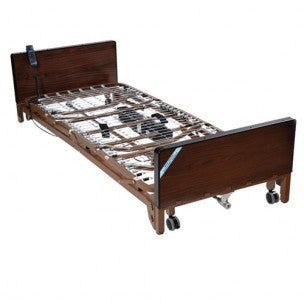
If you've ever sat on the mattress that shipped with a home hospital bed, you already know the problem. It's thin, hard, and about as therapeutic as a folding table. These bundled mattresses exist to meet minimum compliance requirements. They are not designed to prevent pressure injuries.
That distinction matters more than most people realize. Home hospital bed patients often spend 12 to 20 hours per day in bed, making mattress selection a medical decision. Pressure ulcers affect an estimated 2.5 to 3 million US adults each year, contribute to roughly 60,000 deaths annually, and 95% are considered preventable.
The financial stakes are equally serious. Treating a single Stage 4 pressure ulcer can cost between $70,000 and $150,000. The right therapeutic mattress costs a fraction of that. With 70% of pressure ulcers occurring in adults over 65 and immobility increasing risk by 3 to 10 times, the home hospital bed population faces outsized vulnerability.
This article breaks down the three main hospital bed mattress types, their clinical differences, and how to match the right one to your situation.
What Makes a Hospital Bed Mattress Different From a Regular Mattress
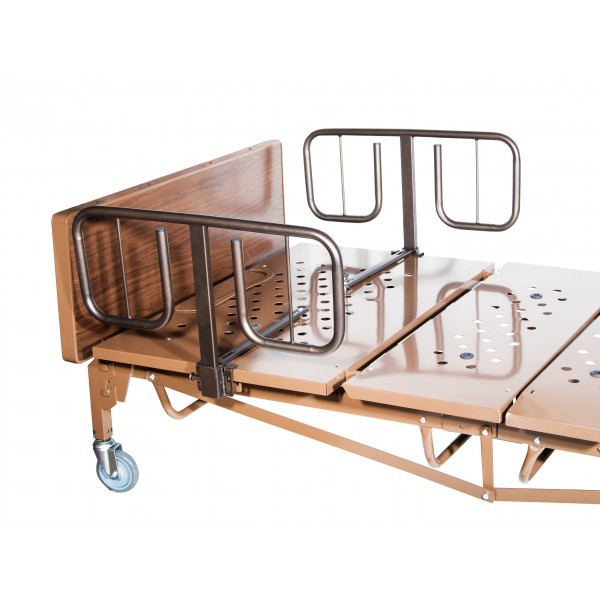
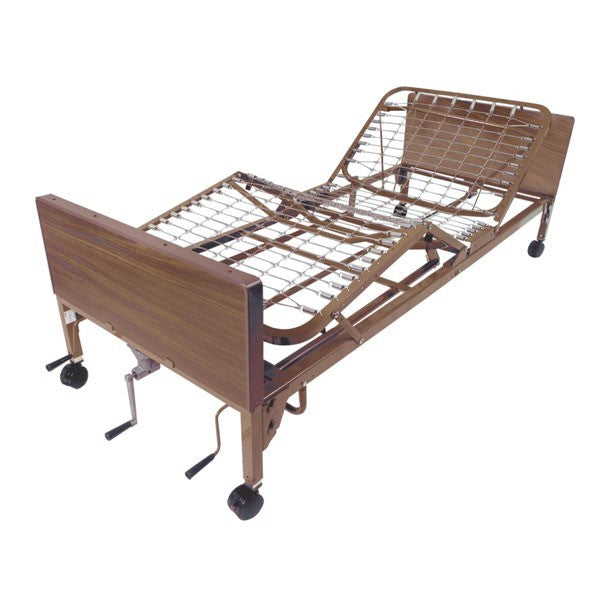
A hospital bed mattress isn't just a firm mattress cut to a different size. It must articulate with the bed frame's head and knee adjustments without resistance. Standard consumer mattresses can't do this; they fight the frame, bunch up, and create uncomfortable pressure points at the bend.
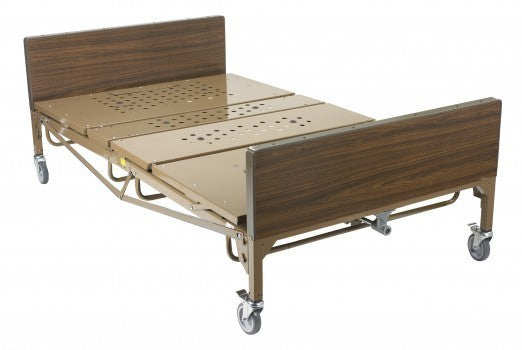
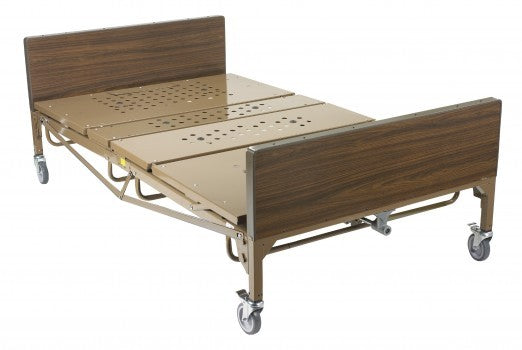
Standard hospital bed mattresses measure 36 inches wide and 6 to 8 inches thick. Any mattress wider than 36 inches (42", 48", or 54") is classified as a bariatric mattress and requires a matching bariatric bed frame.
The primary clinical function of a hospital bed mattress is pressure redistribution, not just softness. Clinicians use the Braden Scale to assess a patient's pressure ulcer risk level, and that score should guide which mattress type is appropriate.
Mattress cover materials also matter for home care. Look for fluid resistance, vapor permeability, ease of cleaning, and compliance with fire retardancy standards (16 CFR Part 1632/1633).
One critical point: no mattress replaces repositioning. The 2025 NPIAP/EPUAP/PPPIA International Guideline (4th Edition) states that repositioning remains essential regardless of the support surface in use, though the interval may be adjusted based on the mattress's pressure redistribution capabilities.
Foam Hospital Bed Mattresses: The Clinical Standard for Most Home Care Patients
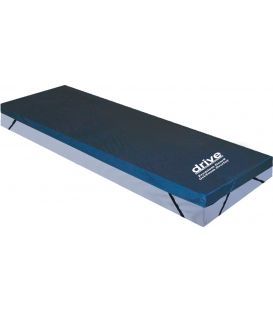
The 2025 NPIAP/EPUAP/PPPIA International Guideline (4th Edition) recommends a pressure-redistribution foam (reactive) full body support surface as the foundational choice for individuals at risk of pressure injuries. For most home care patients, a quality foam mattress is the right starting point.
The clinical evidence supports this recommendation. A meta-analysis referenced in the 2025 guideline found that pressure-redistribution foam reduces pressure injury risk by approximately 64% compared to non-therapeutic foam. High-specification foam reduces incidence by roughly 40% compared to standard mattresses.
When evaluating foam mattresses, two technical metrics matter most. Foam density determines how well the mattress holds its shape over time; higher density foam redistributes pressure more effectively and resists premature breakdown. ILD (Indentation Load Deflection) measures firmness and support level. Together, these numbers tell you far more than a product label.
Foam mattresses flex and bend naturally with adjustable bed frames, making them highly compatible with articulating hospital bed bases. This is a practical advantage that innerspring mattresses simply can't match.
For caregivers, foam offers additional benefits. These mattresses are lightweight, easy to reposition patients on, and simple to change covers. There's no pump to maintain, no motor noise, and no electrical connection required. Quality foam mattresses last up to 10 years with proper care, and pricing typically falls between $175 and $540.
Innerspring Hospital Bed Mattresses: When They Work and When to Avoid Them
Innerspring mattresses are the most affordable hospital bed mattress option, typically ranging from $100 to $400. For patients with very low pressure ulcer risk who primarily need a firm sleeping surface and spend limited time in bed, they can be adequate.
The clinical limitations, however, are significant. Coil compression becomes uneven over time, creating pressure hot spots that increase ulcer risk. This is precisely why innerspring use has sharply declined in clinical settings over the past decade.
There's also an articulation problem. Innerspring coils resist bending, making them poorly compatible with adjustable hospital bed frames that raise the head and knee sections. Foam and air systems handle this far better.
Innerspring mattresses last approximately 8 years, and uneven wear accelerates with heavier patients. More importantly, certain patient populations should avoid them entirely: patients with diabetes (who face 2.5x higher pressure ulcer risk), those with limited mobility, anyone with existing skin integrity concerns, or patients spending more than a few hours per day in bed.
While the upfront cost is lowest, the clinical risk trade-off makes innerspring a poor long-term value for most home hospital bed users.
Alternating Pressure and Low Air Loss Mattresses: Active Systems for Higher-Risk Patients
Alternating pressure mattresses use a powered pump to inflate and deflate air cells in rotation every few minutes. This continuously shifts pressure points across the patient's body, preventing the sustained blood flow restriction that leads to tissue breakdown. Unlike foam, which passively redistributes pressure, alternating pressure is an active mechanism.
The clinical evidence for these systems is compelling. A 2026 retrospective cohort study found that alternating pressure air mattresses (APAMs) reduced Stage III–IV pressure injury risk by 84% in ICU settings, with cost recovery achieved in just 4.3 months and $121,750 saved over 5 years in one facility. A Cochrane systematic review also found that powered active air surfaces probably reduce pressure ulcer incidence compared with standard hospital surfaces, with a risk ratio of 0.42.
Most content conflates alternating pressure with low air loss, but they address different clinical problems. Alternating pressure actively cycles pressure points. Low air loss manages heat and moisture at the skin surface through controlled airflow. The 2025 International Guideline conditionally recommends low air loss surfaces when moisture and microclimate management are clinical concerns, such as for patients with incontinence or excessive perspiration. Some hybrid systems combine both technologies.
One practical concern caregivers raise is pump noise. The pumps produce audible sound during cycling. Placing the pump away from the patient's head, using a timer-based quiet mode if available, and allowing an adjustment period of several days are all effective strategies.
These systems range from $300 to $7,000 depending on complexity. Lifespan is 8 to 10 years, though pump motors can eventually fail with continuous use. Factor in warranty coverage and motor replacement costs when evaluating the total investment.
Bariatric Hospital Bed Mattresses: What Changes When Standard Sizing Isn't Enough
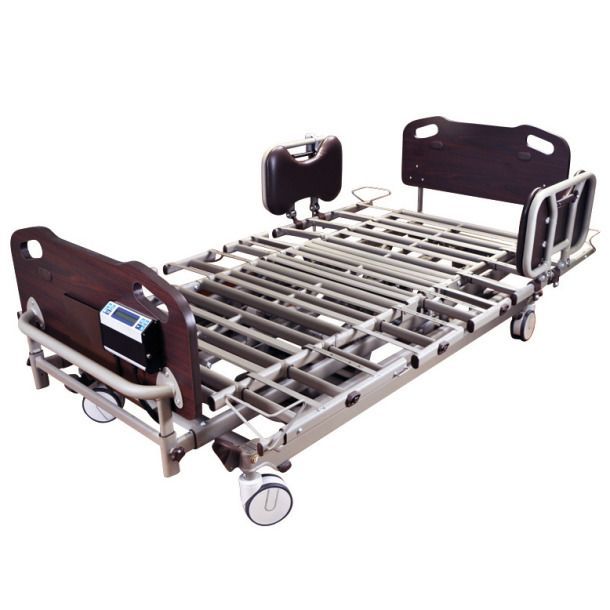
Any hospital bed mattress wider than 36 inches is classified as bariatric. Standard bariatric widths are 42", 48", and 54". Both width and weight capacity must be matched to the patient; getting one right and the other wrong creates real problems.
Weight capacity is not determined by thickness alone. It depends on foam density, multi-layer construction, and perimeter reinforcement. Bariatric foam systems can be engineered to support patients up to 1,000 lbs. Some manufacturers offer bariatric foam mattresses supporting 585 to 750 lbs across their standard bariatric widths, with specialized systems going higher.
ILD ratings are especially important for bariatric patients. Higher ILD values are needed to prevent bottoming out, which occurs when the patient compresses through the foam to the bed frame beneath. When this happens, pressure redistribution is eliminated entirely and ulcer risk spikes.
Bariatric patients face compounded risk factors. Higher body weight increases interface pressure at bony prominences. Obesity is frequently comorbid with diabetes, immobility, and circulatory conditions, each of which is an independent pressure ulcer risk factor.
Bariatric alternating pressure systems also exist and follow the same clinical logic as standard-width systems, scaled to higher weight and width requirements. Before purchasing, always verify the mattress weight capacity against the patient's current weight and confirm that the bariatric bed frame width matches the mattress width exactly.
How to Choose the Right Hospital Bed Mattress for Your Situation
A simple decision framework based on risk level can guide your choice:
- Low risk, limited bed time: A quality pressure-redistribution foam mattress provides solid prevention at a reasonable cost.
- Moderate risk or full-time bed use: A high-specification foam mattress or foam/air hybrid offers stronger protection.
- High risk, existing skin breakdown, or moisture concerns: An alternating pressure or low air loss system provides the most active intervention.
The Braden Scale is a practical starting point. Scores of 18 or below indicate elevated risk and should prompt consideration of therapeutic surfaces beyond basic foam. If you don't have a Braden score, a clinician or home health nurse can assess one quickly.
Diabetic patients deserve specific attention. With a 2.5x higher pressure ulcer risk, diabetic patients should default to at least a high-specification pressure-redistribution foam mattress. For those with limited mobility, alternating pressure should be on the table.
Remember that repositioning every 2 hours reduces pressure ulcer incidence by approximately 55%. The mattress supports prevention, but it does not replace repositioning protocols.
The 2025 International Guideline encourages using standardized performance characteristic test data when evaluating support surfaces. Don't rely on product labels alone. Ask for ILD ratings, weight capacities, and cover specifications before you buy.
At American Quality Health Products, we carry hospital bed mattresses across foam, alternating pressure, and bariatric categories. Our US-based product specialists are available 6 days a week by phone to help match the right mattress to the patient's clinical needs and budget. We also offer 100% financing options and a lowest-price guarantee, so you can make the right clinical choice without compromise.
Making a Confident, Informed Mattress Decision
Here's the core takeaway: foam is the clinical standard for most home care patients. Innerspring is the most limited option clinically and best avoided for anyone at meaningful risk. Alternating pressure and low air loss systems are the strongest tools available for high-risk patients.
The economics of prevention are straightforward. A therapeutic mattress costing a few hundred to a few thousand dollars is a fraction of the $70,000 to $150,000 cost of treating a Stage 4 pressure ulcer. That's both a financial and a clinical argument for investing in the right surface from the start.
Use the Braden Scale, consult with a clinician or home medical equipment specialist, and don't default to the bundled mattress that came with the bed. Your loved one's skin integrity depends on a more deliberate choice.
Our specialists at American Quality Health Products have been helping families navigate these decisions since 2001. Call us 6 days a week and we'll walk you through the options, answer your clinical questions, and find the right mattress at the right price. Free shipping on orders over $100, financing available, and our lowest-price guarantee means you won't find a better deal.
Sources
- The True Cost of Pressure Injuries — Relias
- Pressure Ulcer Statistics: 2026 Verified Data & Trends — Gitnux
- Verified Pressure Ulcer Statistics 2026 — Wifitalents
- NPIAP/EPUAP/PPPIA International Guideline 4th Edition (2025) — Support Surfaces Chapter
- Alternating Pressure Air Mattresses in the ICU: Cost-Effectiveness Retrospective Cohort Study (2026, PMC/Elsevier)
- Cochrane Review: Alternating Pressure (Active) Air Surfaces for Preventing Pressure Ulcers (Shi et al., 2021)
- 2025 NPIAP Guidelines Update Summary — Guideline Central


