






The 2 A.M. Reality of Home Caregiving
It's 2 a.m. and a family caregiver is awake again, leaning over a low, fixed-height bed to manually reposition a parent who can't turn on their own. This isn't an unusual night. It's every night. Across the United States, roughly 53 million unpaid family caregivers provide care to a loved one aged 50 or older, and the toll is staggering.
According to A Place for Mom's 2025 survey of over 1,000 U.S. caregivers, 78% report experiencing burnout, many on a daily basis. A 2024 AARP report found that 70% of adults ages 40 and older have sleep difficulties, and NCOA's March 2025 sleep survey found that more than 75% of older adults say pain makes it harder to sleep well.
An adjustable hospital bed addresses both sides of this equation. It improves sleep quality for the patient and protects the physical and emotional health of the person providing care. This article explains exactly how, and why this piece of home medical equipment is a practical tool rather than a luxury.
How Adjustable Hospital Beds Actually Work
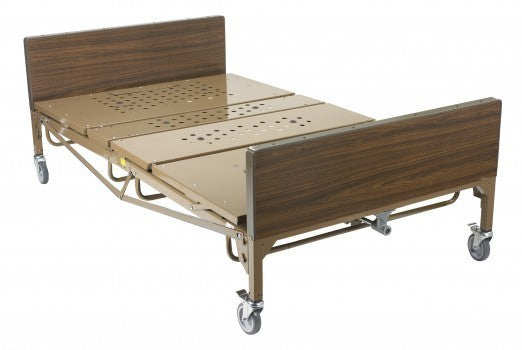
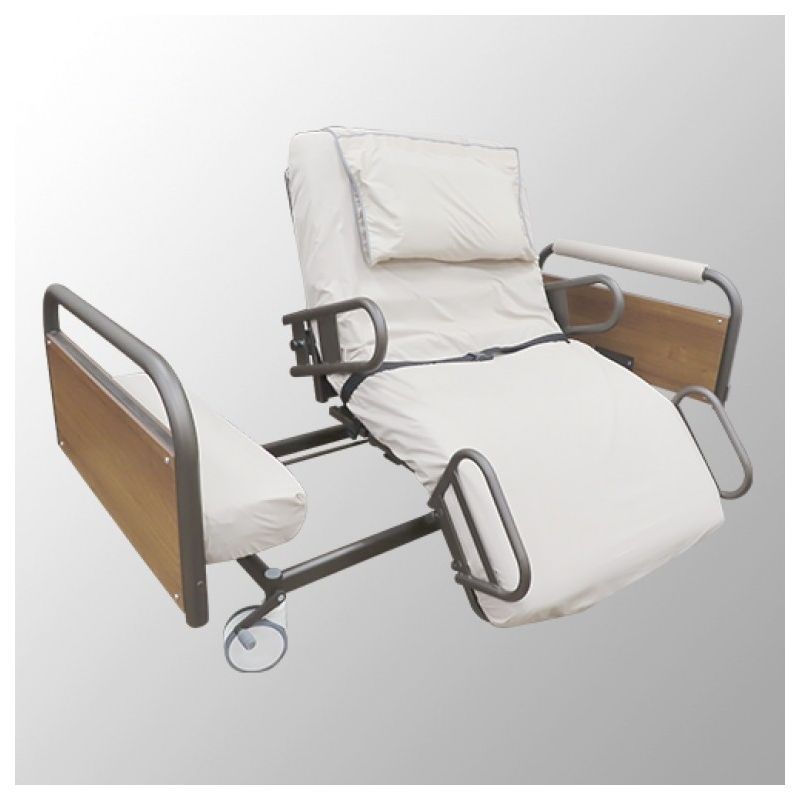
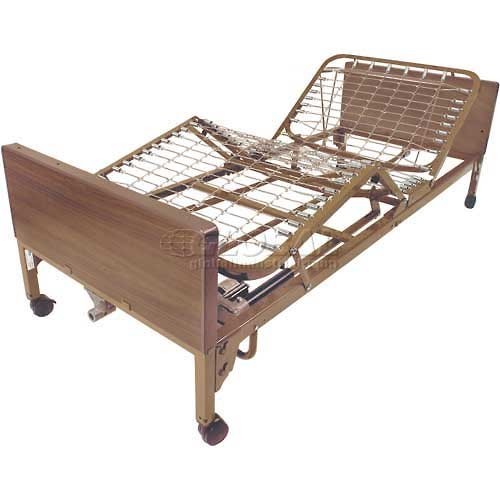
An adjustable hospital bed gives you motorized control over several key positions: head elevation, foot elevation, knee-break positioning, and full-height (hi-lo) adjustment. All of these functions are operated through a wired pendant remote or a wireless controller, so the patient or caregiver can make changes with the press of a button.
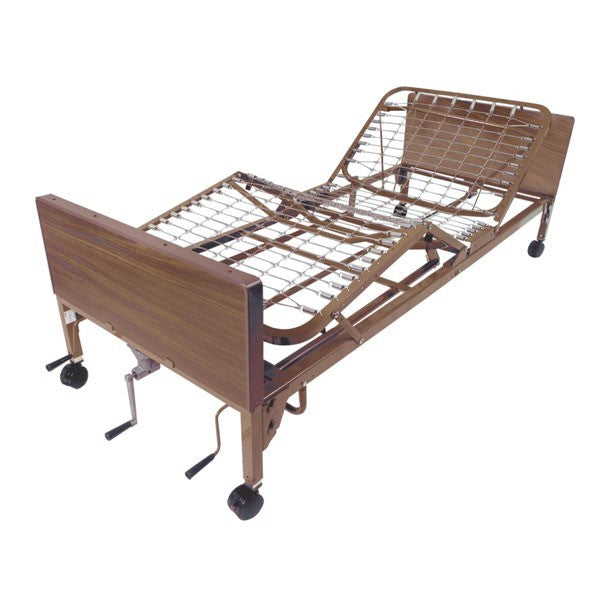
The main distinction to understand is full-electric vs. semi-electric. A full-electric model adjusts every position, including bed height, via motor. A semi-electric model motorizes the head and foot sections but requires a manual crank for height adjustment. For patients with limited upper body strength, or when caregiver convenience is a priority, full-electric is the better fit.
Many full-electric beds also offer Trendelenburg and reverse-Trendelenburg positions, which tilt the entire bed frame to promote therapeutic circulation benefits not possible on a standard flat bed. These positions are especially useful for patients managing edema or post-surgical recovery.
Technology is also changing the landscape. According to Market Growth Reports, 31% of homecare medical beds now feature digital or mobile app connectivity, allowing adult children or care managers to monitor bed position remotely.
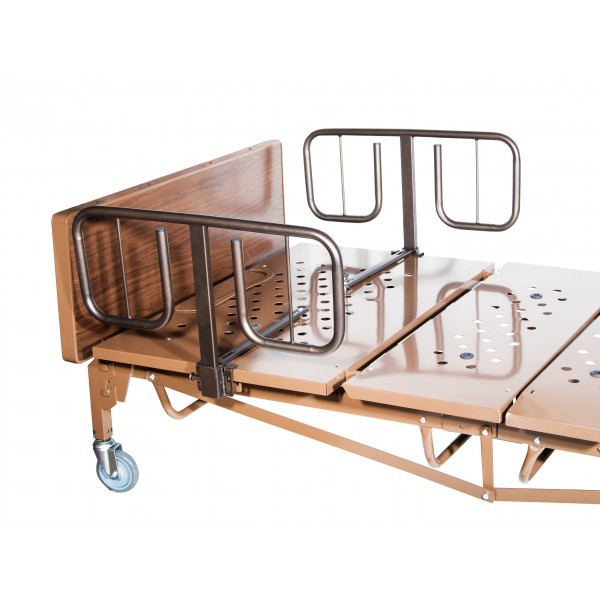
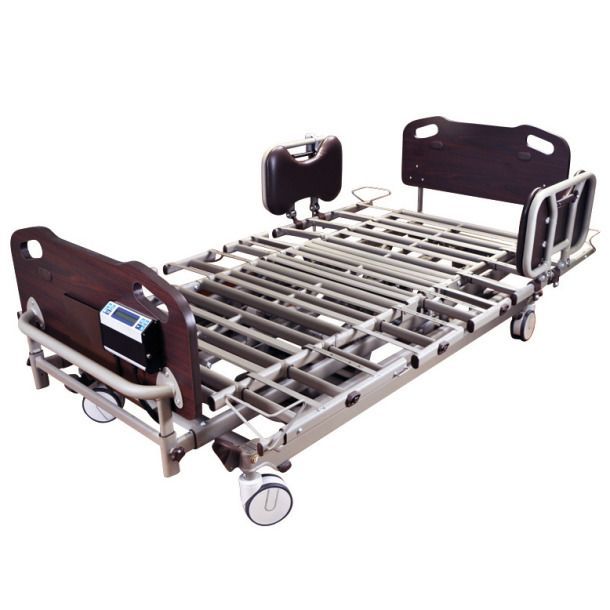
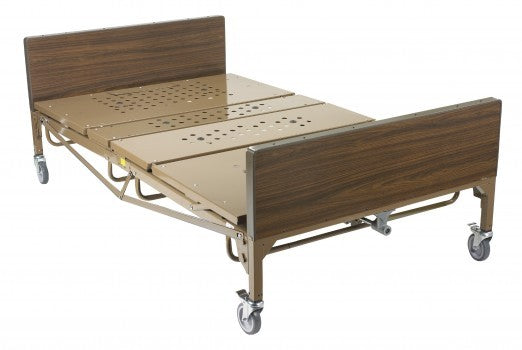
Side rails serve a dual purpose: fall prevention and a stable grip point for patient-assisted repositioning and edge-of-bed exercises. For patients with higher weight support needs, bariatric models with reinforced frames support up to 750 lbs with wider sleeping surfaces designed for proper weight distribution.
Sleep Quality Benefits for the Patient at Home
Poor sleep compounds every other health problem. An adjustable hospital bed targets the most common sleep disruptors for older adults and chronically ill patients through precise positioning.
Breathing difficulty: Head elevation uses gravity to reduce airway obstruction and minimize fluid accumulation in the lungs. For patients with COPD, asthma, or sleep apnea, even a modest incline can mean the difference between restful sleep and repeated waking throughout the night.
Leg swelling and restless legs: Foot elevation improves venous return and circulation in the lower extremities. Nighttime swelling and restless leg discomfort are common in older adults, and elevating the legs addresses both by reducing fluid pooling.
Acid reflux: Elevating the head of the bed keeps stomach acid from traveling up the esophagus. For patients with GERD, this simple mechanical change can dramatically reduce the number of reflux episodes that interrupt sleep.
What makes an electric adjustable bed particularly valuable is the remote control. Patients can adjust their own position throughout the night without calling for help, preserving the patient's dignity and the caregiver's sleep at the same time.
It's worth noting that 63% of patients prefer treatment at home rather than in a hospital setting. The comfort and familiarity of home, combined with clinical-grade positioning capability, creates a meaningful quality-of-life improvement. The psychological benefit matters too: the ability to reposition independently restores a sense of control, reduces anxiety, and helps patients fall asleep faster.
How Adjustable Beds Reduce Caregiver Physical Strain
The biomechanics of caregiving at a fixed-height bed are punishing. Every time a caregiver bends forward over a low bed to perform wound care, bathing, or repositioning, they place concentrated load on the lumbar spine. Repeated daily, this accumulates strain that can lead to serious back injury within months.
A height-adjustable bed changes the equation entirely. The caregiver raises the bed to a comfortable working height, eliminating the need to bend forward. Tasks that were physically damaging become manageable, sustainable ones.
Variable height also benefits the patient directly. When the bed is lowered, the patient can sit at the edge with feet flat on the floor, enabling safer and more independent transfers to a wheelchair or standing position. Every transfer the patient can complete with less assistance is one less physical demand on the caregiver.
The data supports this: caregiver workload decreases by 28% with advanced homecare bed systems. That number matters when you consider that family caregivers spend an average of 22.8 hours per week on care tasks, with nearly 30% spending more than 30 hours weekly.
Meanwhile, 70% of caregivers report at least one physical health issue due to burnout. An adjustable bed is a direct intervention against this outcome. Reducing the physical intensity of each individual task compounds into significant long-term health protection for the person providing care.
Pressure Injury Prevention: The High-Stakes Benefit Most Families Don't Know About
Pressure ulcers can develop in as little as two hours of sustained pressure on the skin. For bedbound or mobility-limited patients at home, around-the-clock repositioning is a clinical requirement, not an option.
The scale of this problem is enormous. Approximately 2.5 million Americans develop pressure ulcers every year. The Agency for Healthcare Research and Quality (AHRQ) estimates that pressure ulcers cost $9.1 to $11.6 billion annually in the U.S., with per-patient treatment costs reaching up to $151,700.
Adjustable hospital beds support the evidence-based standard of repositioning every 2 to 3 hours. Precise head-of-bed angle control, knee-break positioning, and height adjustment for safer transfers all make scheduled repositioning more effective and less physically demanding.
Consider the financial logic: the purchase price of an adjustable hospital bed is a fraction of the cost of treating even a single pressure ulcer. For families weighing the investment, this is a cost-prevention argument that carries real weight.
Side rails give patients a stable grip point for self-initiated repositioning, which can reduce the frequency of caregiver-assisted turns during the night. Bariatric patients face heightened pressure injury risk due to weight distribution across the sleeping surface, which is why bariatric-specific adjustable beds with proper support surfaces are especially important for this population.
Who Benefits Most from a Home Hospital Bed
Seniors aging in place: Nearly 80% of adults over 50 prefer to remain at home. An adjustable bed is a frontline tool in making that preference medically sustainable, especially as the World Health Organization projects that by 2030, one in six people globally will be over 60.
Post-surgical recovery patients: After hip replacement, knee replacement, or spinal surgery, adjustable positioning reduces pain, supports safe transfers, and enables more comfortable recovery at home rather than in a facility.
Patients with chronic conditions: COPD and sleep apnea benefit from head elevation. GERD responds to inclined sleeping. Arthritis pain is managed through position changes. Parkinson's disease and stroke recovery patients gain safer transfer support and fall prevention through height adjustment and side rails.
Bariatric patients: Reinforced frames, wider sleeping surfaces, and higher weight capacities (up to 750 lbs) address the specific structural and pressure-management needs of this population.
Family caregivers: When the patient can self-reposition and transfer more independently, nighttime interruptions decrease. Protecting caregiver sleep is not a secondary benefit. It is a documented driver of burnout prevention.
Choosing the Right Adjustable Hospital Bed: What to Look For
Full-electric vs. semi-electric: Full-electric is recommended when the patient has limited strength or when caregiver convenience is a priority. Semi-electric works well for patients who are more mobile and need fewer height adjustments.
Weight capacity: Standard beds typically support 350 to 450 lbs. Bariatric models extend to 600 to 750 lbs. Always match the bed to the patient's needs with room to spare.
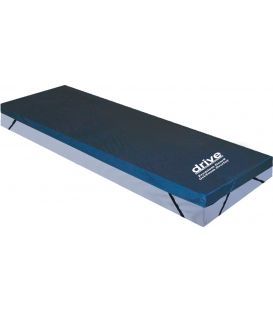
Mattress compatibility: The adjustable frame requires a compatible mattress. Pressure-relief and alternating-pressure mattresses are available and recommended for patients at risk of skin breakdown.
Side rail configuration: Full-length rails provide maximum containment. Half-length rails at the head support repositioning without creating an entrapment risk at the foot of the bed.
Remote control type: Wired pendants are reliable and simple. Wireless remotes and app-connected models offer more flexibility for patients with limited hand dexterity.
If you're unsure which configuration is right for your situation, call our US-based product specialists. With over 22 years of experience matching patients to the right equipment, they can help you find the bed that fits your loved one's specific clinical and home environment needs.
Making the Right Decision for Your Family
An adjustable hospital bed is not an admission of decline. It is a proactive investment in the patient's independence, dignity, and safety, and in the caregiver's long-term health.
The dual benefit is clear: better sleep and independent repositioning for the patient; reduced physical strain, fewer nighttime interruptions, and lower burnout risk for the caregiver. The financial logic holds up as well. The cost of an adjustable bed is measurably small compared to the potential cost of a pressure ulcer, a caregiver injury, or an avoidable hospitalization.
At American Quality Health Products, we back every purchase with our Lowest Price Guarantee, free shipping on orders over $100, and 100% financing options through third-party providers. We carry industry-leading brands trusted by healthcare professionals, and we've been helping families find the right home medical equipment since 2001.
Call our live, US-based product specialists six days a week for personalized, no-pressure guidance tailored to your specific situation. The right bed doesn't just change how someone sleeps. It changes how a family cares for each other.
Sources
- Gitnux — Caregiver Burnout Statistics
- A Place for Mom — 2025 Caregiver Burnout and Stress Statistics
- AARP — Best Mattress for Seniors
- NCOA — Best Adjustable Beds
- Timotion — Benefits of Adjustable Beds
- Market Growth Reports — Homecare Medical Beds Market
- Hospital Bed Solutions — Preventing Caregiver Strain
- SonderCare — Benefits of Adjustable Hospital Beds
- Healogics — Pressure Ulcer Management
- Meticulous Research — WHO Aging Population Data


