





What No One Tells You Before You Buy a Home Hospital Bed
A doctor or discharge planner just told your family that a hospital bed is needed at home, and suddenly you're facing a decision you never expected to make. Where do you even start?
About 63 million Americans serve as family caregivers, and 78% report experiencing burnout. The right equipment makes a real difference for both the person receiving care and the person providing it. This guide walks you through the key decisions: bed type, weight capacity, mattress compatibility, Medicare coverage (and its gaps), and room setup. With the right information, this process becomes manageable, and the bed you choose will protect both patient and caregiver for years to come.
The 3 Types of Home Hospital Beds (And Which One Most Families Actually Need)
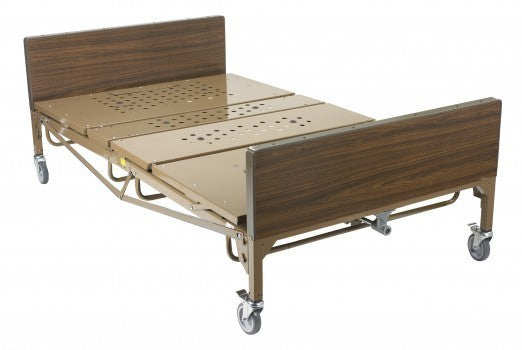
Home hospital beds fall into three categories, and the differences between them matter more than most families realize.
Manual Beds
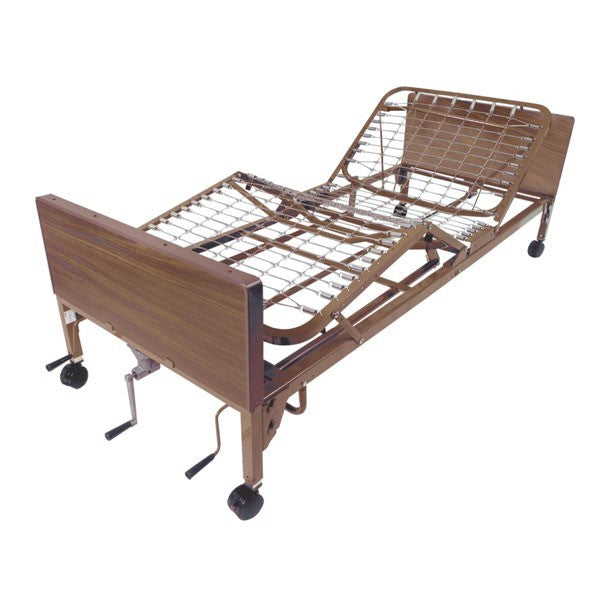
These use hand cranks to adjust the head, foot, and height positions. They're the most affordable option at roughly $500 to $600, making them practical for short-term recovery or tight budgets. The trade-off is significant: every adjustment requires physical effort from the caregiver. Over weeks and months, that adds up.
Semi-Electric Beds
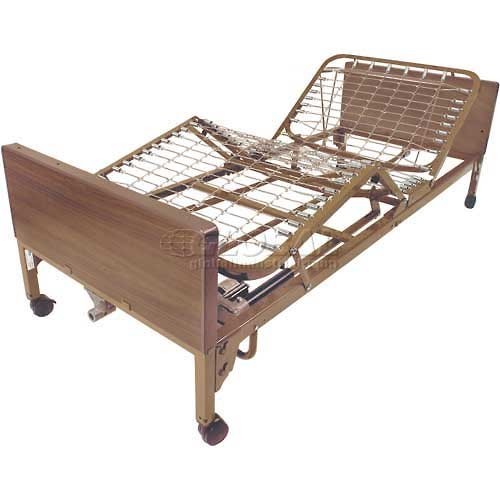
Semi-electric models use electric motors for head and foot positioning but rely on a manual crank for height adjustment. Prices typically range from $1,000 to $2,000. This is the middle-ground option and, importantly, the type that Medicare will cover. For many families, it's a solid starting point.
Full-Electric Beds
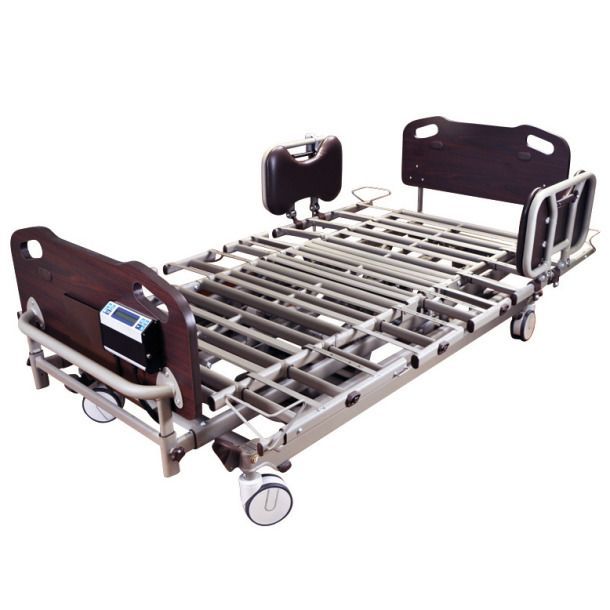
Full-electric beds motorize every function, including height adjustment. They range from $1,500 to $4,500 or more. A 2021 study published in Applied Ergonomics found that when caregivers used adjustable-height beds set to proper working height, spinal compression and shear forces dropped significantly compared to fixed-height beds. That finding alone explains why 58% of homecare bed installations are now electric models.
For long-term home care, full-electric is the most caregiver-friendly choice. One important caveat: Medicare does not cover the electric height feature, classifying it as a convenience. That gap is covered in detail below.
A Note on Hi-Low Beds
Hi-low beds can lower to as little as 9 inches from the floor for fall prevention and raise to 26 inches or higher for caregiver working height. They're especially valuable for patients with dementia, Alzheimer's, or a high fall risk.
Weight Capacity and Bariatric Options: Getting the Safety Margin Right
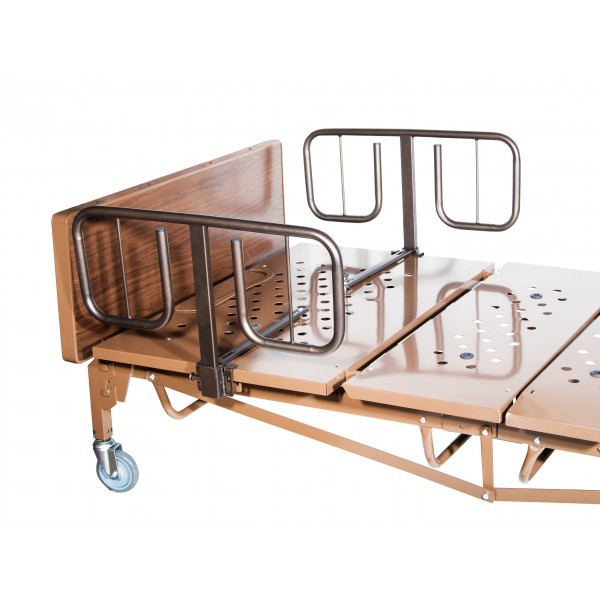
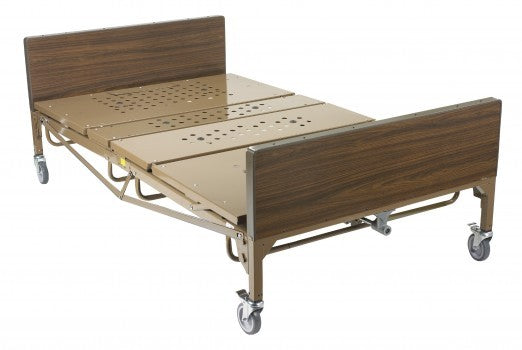
Standard home hospital beds support between 350 and 450 pounds. Bariatric models are built for 600 to 1,000 pounds or more, and they're an entirely different product category with expandable widths, reinforced frames.
A critical rule: always choose a bed rated at least 50 to 100 pounds above the patient's current weight. This provides a necessary safety margin that accounts for weight fluctuation and the added load of bedding, medical devices, and caregiver interaction.
Bariatric home care is a growing and underserved need. Do not assume a standard bed will work simply because it's close to the weight limit. Brands like Drive Medical offer bariatric-specific home hospital beds designed for this exact purpose. If you're unsure about the right capacity, our product specialists can help you determine the safest option.
Medicare covers manual and semi-electric hospital beds under HCPCS code E0260. Qualifying conditions under LCD L33820 include COPD, congestive heart failure, severe arthritis, Parkinson's disease, ALS, multiple sclerosis, stroke recovery, pressure injuries, and post-surgical positioning needs. A face-to-face physician visit and a Written Order Prior to Delivery (WOPD) are required before approval.
What Medicare Does Not Cover
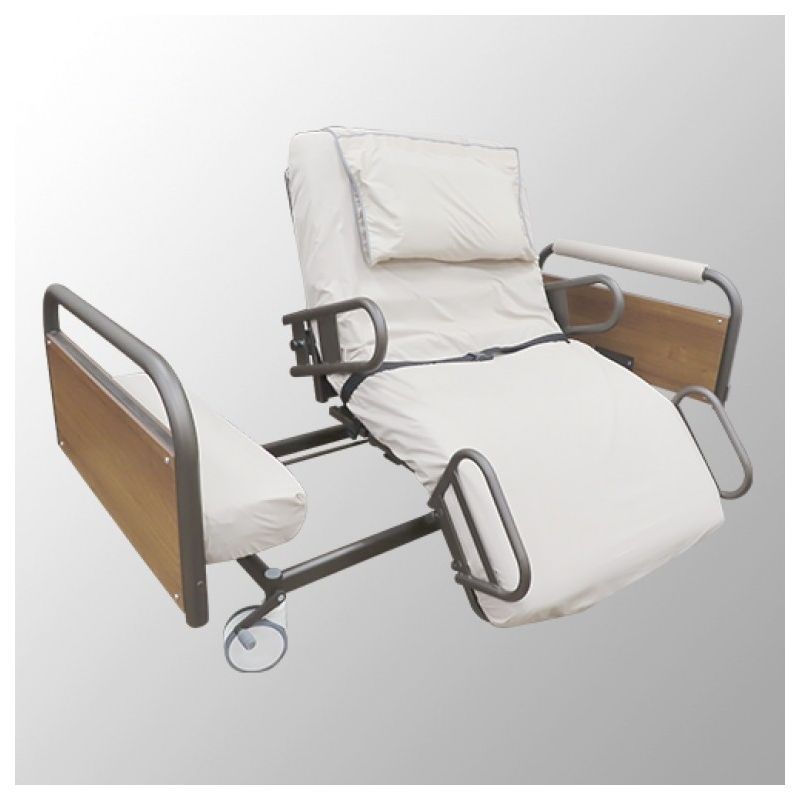
Full-electric height adjustment is classified as a "convenience" feature and is not covered. The same applies to hi-low beds and rotating beds.
Your Options for Full-Electric
For families paying out of pocket, we offer 100% financing through third-party providers, making full-electric beds accessible without a large upfront cost.
Hospital Bed Mattresses: The Compatibility Issue Most Families Miss
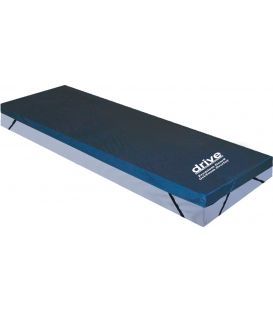
Hospital bed mattresses must measure 39 inches by 80 inches, which is Twin XL sizing. A standard Twin mattress is only 75 inches long, leaving a 5-inch gap at the foot of the bed. That gap compromises side rail function and creates a serious entrapment hazard.
Standard innerspring or hybrid mattresses are also a problem. They resist the bending motion of an adjustable bed frame, making them both unsafe and non-functional for this application.
For patients at risk of pressure injuries, alternating-pressure mattresses are worth serious consideration. A Cochrane network meta-analysis of 21 trials found that these mattresses reduced pressure injury incidence by approximately 47% compared to standard hospital mattresses. Combined with proper repositioning on an adjustable bed (which can reduce pressure injuries by up to 86%), the right mattress becomes a critical part of the care plan.
Our recommendation: purchase a mattress as part of an all-in-one package (bed, mattress, and rails together). This ensures compatibility and typically offers better value than buying components separately.
Room Setup and Caregiver Workflow: Practical Logistics Before Delivery
Before your bed arrives, measure the room. A standard hospital bed is 36 inches wide by 80 inches long. The minimum room size for basic functionality is about 10 by 10 feet, but 12 by 12 feet or larger is strongly preferred for comfortable caregiver workflow.
Measure doorways and hallways before delivery day. A bed that cannot get through the door is a problem nobody wants to solve under pressure.
Plan for floor space on both sides of the bed. Caregiver access from either side is essential, and if a Hoyer lift or other transfer device may be needed, you'll want even more clearance.
Side Rail Safety
Understand the difference between assist rails (grab bars that help patients reposition themselves) and full-length restraint rails, which carry entrapment risks and should be used carefully. Assist rails are generally the safer, more practical choice for home use.
Electrical and Emergency Considerations
Position the bed near an electrical outlet. Consider proximity to the bathroom and to wherever the caregiver sleeps for faster nighttime response. About 41% of newer hospital bed models include battery backup and CPR-release features that drop the bed flat in an emergency. These are practical considerations worth asking about, especially for long-term home care.
Choosing a Bed That Protects Both Patient and Caregiver
The right home hospital bed comes down to five decisions: bed type, weight capacity, Medicare coverage reality, mattress compatibility, and room logistics. Each one affects safety, comfort, and the long-term sustainability of home care.
Properly equipped hospital beds with appropriate safety features can reduce fall incidents by up to 68%, and the right adjustable bed can reduce caregiver back injuries by up to 60%. The CDC's Safe Patient Handling program and NIOSH both identify adjustable bed height as a core tool for reducing musculoskeletal injuries among caregivers.
Complex needs deserve personalized guidance. At American Quality Health Products, we've been helping families find the right home medical equipment since 2001, backed by over 5,000 verified customer reviews. Our live, US-based product specialists are available by phone six days a week to walk you through your specific situation.
Give us a call or browse our hospital bed selection online. The right bed is out there, and we'll help you find it.


