


What Happens When Your Scooter Breaks Down?
A mobility scooter that stops working is more than a mechanical problem. For a senior or person with a disability, it can mean lost independence, missed appointments, and real isolation. The National Council on Aging has noted that mobility assistance devices significantly affect older adults' independence and quality of life. When your scooter is out of commission, daily life grinds to a halt.
That's why warranty and service support deserve as much attention as speed, weight capacity, or turning radius. This guide compares three of the most established brands in the industry: EV Rider (operating since 1996, headquartered in Fort Myers, FL), Shoprider (founded 1988, US distribution based in Torrance, CA), and Pride Mobility (founded 1986). Most buyers overlook the warranty fine print until something goes wrong. We break down exactly what each brand covers, what they don't, and which one actually has your back after the purchase.
Warranty Coverage at a Glance: Side-by-Side Comparison
All three brands structure their warranties around four main categories: frame, drivetrain/motor, electronics and charger, and battery. The differences between them are significant.
Pride Mobility offers the strongest frame protection with a Lifetime Limited Warranty on structural frame components, including the main frame, fork, seat post, and tiller frame. Drivetrain coverage (transaxle, motor, brakes) lasts 2 years. Electronics and battery chargers are covered for 1 year. Batteries carry a 6-month warranty, though this coverage comes from the battery manufacturer, not from Pride itself.
Shoprider provides a 5-year frame warranty, the longest among time-limited frame warranties in this comparison. Electronics and motor coverage lasts 12 months, and batteries are covered for 6 months. This coverage is consistent across all four of Shoprider's current scooter models, and their products are manufactured to ISO9001 quality standards.
EV Rider offers a 3-year limited warranty on structural frame components, 1 year on parts and electronic components/chargers, and a notable exclusion: batteries provided free with the scooter are explicitly excluded from the standard warranty. EV Rider states that battery manufacturing defects are expected to appear within the first two months of use. Gradual deterioration after that period is considered normal wear and tear.
The key takeaway: Pride wins on frame longevity with its lifetime coverage. Shoprider leads among time-limited frame warranties at 5 years. EV Rider offers the shortest frame coverage at 3 years. One detail that applies to all three brands: warranties are non-transferable and limited to the original purchaser only. If you are receiving a scooter as a gift or buying secondhand, you may have no warranty coverage at all.
The Hidden Cost of Warranty: What None of Them Cover
Even when a part is covered under warranty, you can still face hundreds of dollars in out-of-pocket costs. All three brands exclude labor, service call charges, and shipping fees from their standard warranties. For seniors on fixed incomes, this is a critical detail that rarely gets discussed upfront.
EV Rider requires the purchaser to deliver the unit to an authorized repair facility at their own expense. Warranty parts are shipped via FedEx Ground domestically, but getting the scooter to a service center is the owner's responsibility.
Pride Mobility does not cover labor or service calls unless they are pre-authorized in writing by Pride. All warranty service must be performed by an authorized Pride Provider.
Shoprider offers phone-based service and technical assistance at (888) 896-8866 and distributes through a network of DME/HME providers across the US. The same labor and service exclusions apply, however.
The battery exclusion gap deserves special attention. All three brands offer 6 months of battery coverage at most, and EV Rider effectively excludes batteries after just 2 months of use. This is particularly relevant for travel scooter users who store their units in garages, car trunks, or other environments with fluctuating temperatures, all of which accelerate battery degradation.
The non-transferable warranty risk is also worth noting. A family member purchasing a scooter as a gift should ensure the warranty is registered in the end user's name. Anyone buying through a secondary market should assume they have zero manufacturer warranty coverage.
Service Networks: Who Can Actually Fix Your Scooter?
A warranty is only as good as your ability to use it. For daily-use scooter owners who cannot afford downtime, the size and accessibility of a brand's service network may matter more than the warranty document itself.
Pride Mobility claims the largest field service network in the industry for mobility scooters. All warranty service must go through an authorized Pride Provider, which gives urban and suburban buyers a strong advantage. If you live near a metro area, finding a Pride-authorized repair center is generally straightforward.
Shoprider distributes through an established network of DME/HME providers across the United States, with its US distribution hub in Torrance, California. Phone-based technical support is available, and the company's consistent warranty terms across its product line simplify the service process.
EV Rider takes a different approach. Your first point of contact for warranty service is the dealer or company from whom you purchased the scooter, not EV Rider directly. Phone-based troubleshooting is available from their Fort Myers, FL headquarters, and the company ships most products within 24 hours with typical delivery in 3 to 7 days.
For buyers in rural or remote US locations, all three brands present a real access challenge. Authorized providers and dealers tend to cluster in populated areas, leaving rural owners with longer wait times and higher shipping costs for warranty service.
Pride offers an optional upgrade worth knowing about: the Premier Coverage Plan, a 2-year extended service contract for approximately $269. It must be purchased at the point of sale and cannot be added later. Many buyers don't learn about it until after they've already missed the window.
Our US-based product specialists at American Quality Health Products are available 6 days a week by phone and can help you identify which brand's service network best fits your geographic location before you buy. That kind of guidance can save you real frustration down the road.
Which Brand Is Right for Your Situation?
Rather than picking a single best brand, the smarter approach is matching warranty strengths to how you'll actually use your scooter.
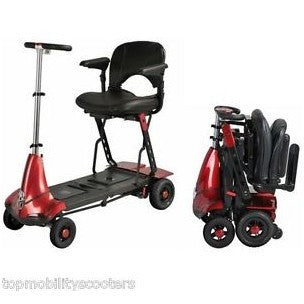
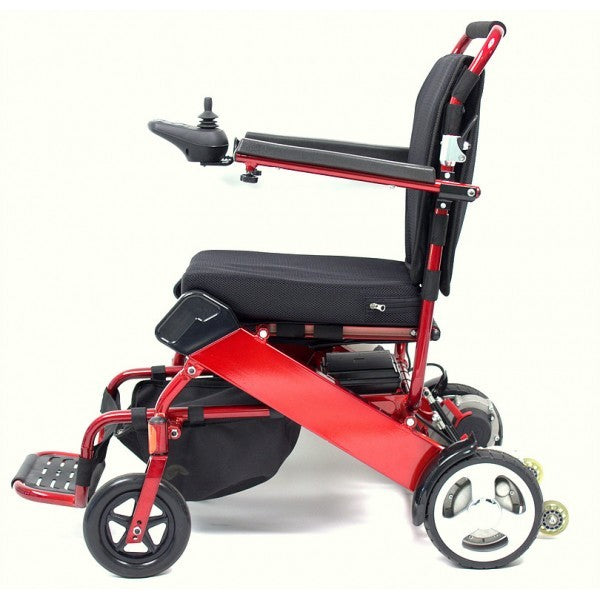
For travel and folding scooter users: EV Rider's Transport series has earned strong reliability credibility in this segment. Buyers must understand the battery exclusion policy and plan for out-of-pocket shipping costs on any warranty claim. If you travel frequently, budget for a replacement battery within the first year or two.
For value-focused everyday users: Shoprider's 5-year frame warranty and consistent coverage across all models make it a solid choice for buyers who want predictable, long-term frame protection at a lower price point. Shoprider scooters start around $600, making them accessible for budget-conscious shoppers.
For premium performance buyers or those needing the broadest service network: Pride Mobility's lifetime frame warranty and largest authorized provider network make it the strongest option for maximum post-purchase support. Pride scooters range from $2,000 to $4,000 or more, reflecting the premium positioning.
There's also the Medicare factor to consider. Medicare and similar programs can cover up to 80% of qualifying scooter costs, which lowers the initial financial barrier. That also means replacement may not be easily reimbursed if something breaks, making strong warranty and service support your safety net after the initial purchase.
With the US senior population projected to reach 73 million by 2030, demand for reliable, well-supported mobility scooters will only grow. Researching warranty terms now is a long-term investment in your independence.
Make a Confident, Informed Decision
Here are the three core takeaways from this comparison:
- Pride Mobility leads on frame coverage (lifetime) and service network scale.
- Shoprider leads on time-limited frame warranty value (5 years) and offers consistent coverage across its lineup.
- EV Rider leads in the folding and travel segment but carries the most restrictive battery policy.
Across all three brands, always ask what is not covered. Labor, shipping, and battery wear are universal exclusions that directly affect your real out-of-pocket risk.
If you are unsure which brand and model fits your needs, location, and budget, call our US-based product specialists. With over 25 years of experience since 2001, more than 5,000 verified customer reviews, and availability 6 days a week by phone, we provide personalized guidance you can count on. We also offer financing options and our Lowest Price Guarantee on every mobility scooter we carry.
The right scooter, backed by solid warranty knowledge, keeps you moving forward independently.


