







Three Types of Manual Wheelchairs — Most Buyers Only Know One
Here is a scenario we hear far too often: a family member picks up a transport wheelchair for a loved one recovering from surgery, assuming it is just a lighter version of a regular wheelchair. Weeks later, the user cannot move independently, their recovery stalls, and the family ends up buying a second chair. That first purchase sits in the garage.
There are three main categories of manual wheelchairs: transport, standard, and lightweight. Choosing the wrong one is one of the most common and entirely preventable mistakes first-time buyers make. A mismatch between user needs and chair type can increase dependence on caregivers or, according to research published by the National Institutes of Health, lead to outright abandonment of the device.
This guide walks through every category, what each is designed for, and how to match the right chair to the right person. With approximately 5.5 to 6 million U.S. adults relying on a wheelchair as their primary mobility device, and more than 1 in 5 Americans projected to be over 65 by 2030, getting this decision right matters.
Transport Wheelchairs: Lightweight, But Not for Independent Users
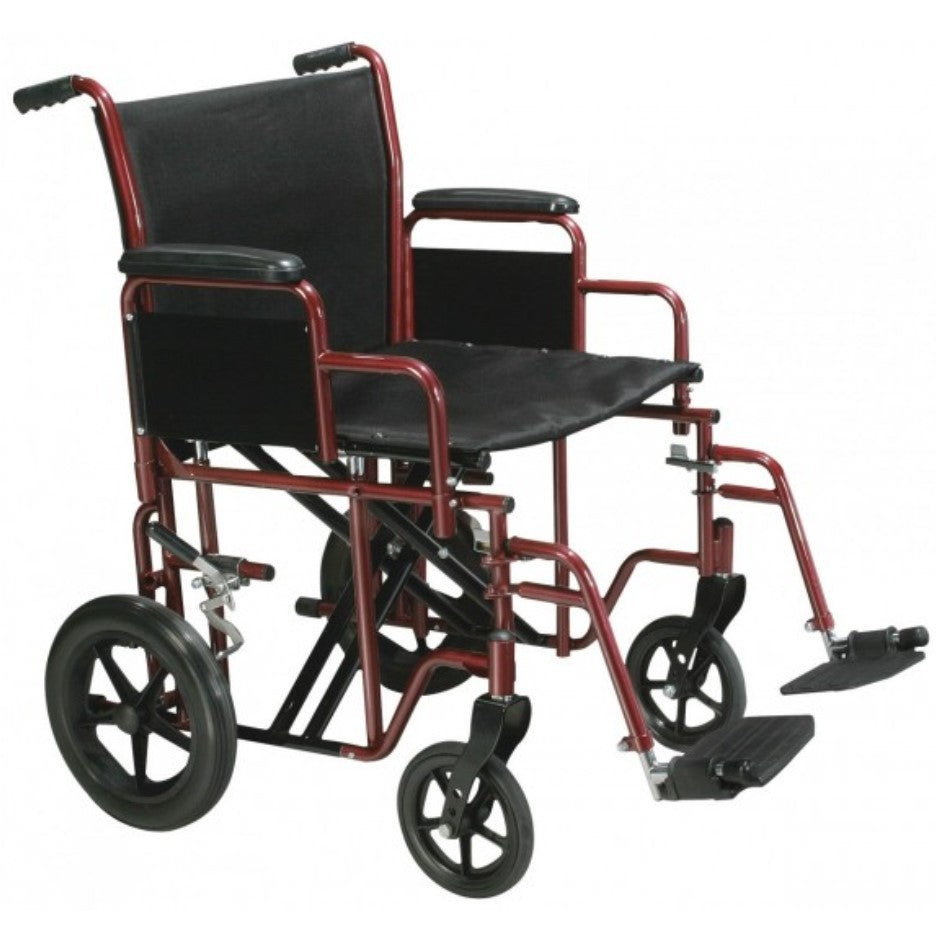
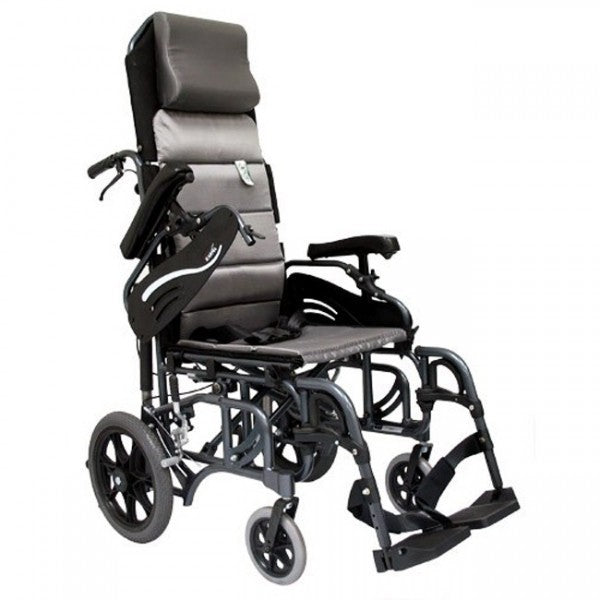
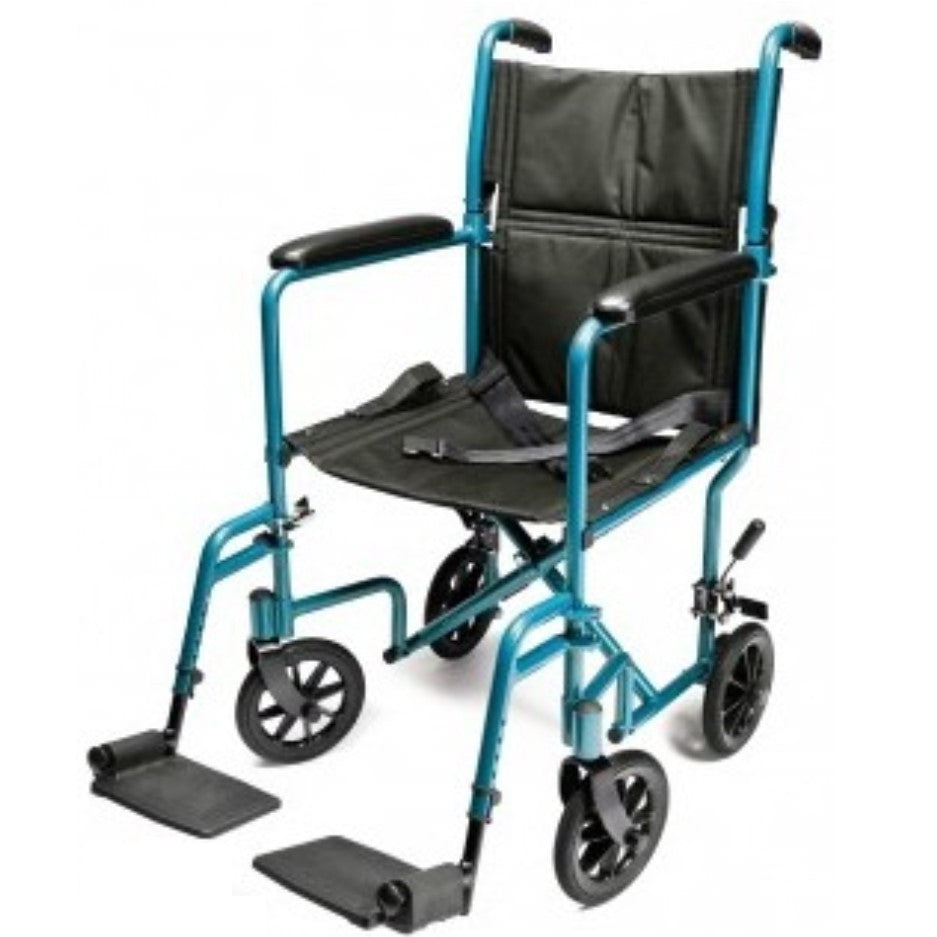
A transport wheelchair is designed exclusively for caregiver-assisted travel. It is not a self-propulsion chair. The single most important structural difference is the rear wheels: transport chairs use small 12- to 14-inch rear wheels that physically prevent the user from pushing themselves. This is not an adjustable setting. It is a hard design limitation.
Transport chairs typically weigh between 15 and 25 lbs, making them the lightest manual wheelchair category by a wide margin. They fold compactly and load easily into a car trunk. For users who cannot or do not need to self-propel, have a reliable caregiver present, and primarily need a chair for outings, medical appointments, or travel, a transport wheelchair is an excellent fit.
The problem arises when first-time buyers assume a transport chair is simply a lighter version of a standard wheelchair. It is not. Choosing one for a user who needs any degree of independence is a serious mistake that can set back recovery and increase caregiver burden unnecessarily.
On the insurance side, transport wheelchairs are classified under HCPCS codes E1037, E1038, and E1039, and require documentation that the user cannot self-propel and has a caregiver available.
Roughly 55.5% of adult wheelchair users rely on car travel as their primary transportation mode. For this group, when caregiver-assisted use is appropriate, the transport chair's foldability and light weight are genuinely practical advantages.
Standard Manual Wheelchairs: The Everyday Workhorse
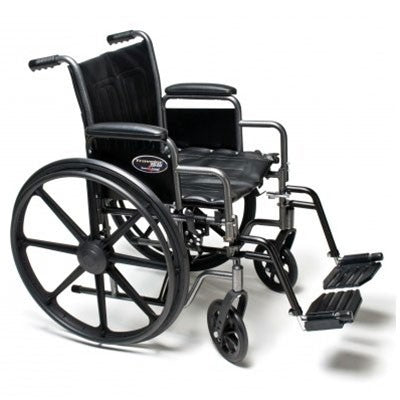
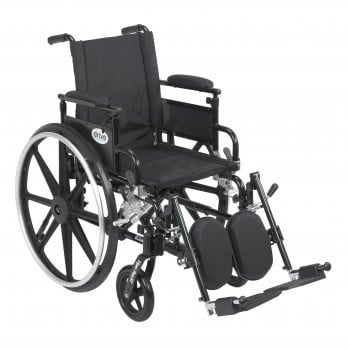
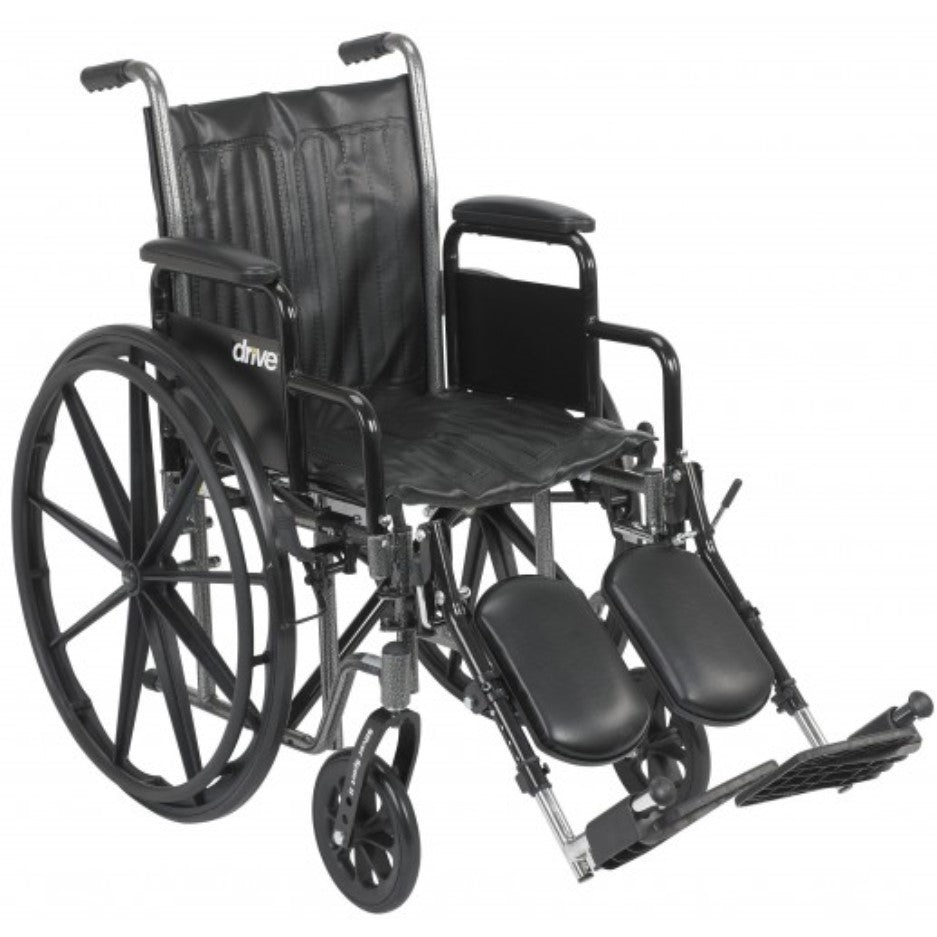
Standard wheelchairs, classified as K0001 under Medicare, weigh more than 36 lbs and carry a weight capacity of 250 lbs or less. Their defining feature is large rear wheels, typically 24 inches, that allow the user to self-propel. If the person sitting in the chair needs to move themselves, even part of the time, this is the baseline category to consider.
Typical dimensions run approximately 25 to 27 inches in overall width, 42 inches in length, and 36 to 40 inches to the push handles. The most common seat width is 18 inches, accommodating adults weighing 150 to 250 lbs. According to QueenDimensions.com, these measurements hold across most major manufacturers.
Standard chairs are built for users who need to self-propel at least some of the time, spend extended periods in the chair, or require a durable, affordable primary mobility solution. They lead the global manual wheelchair market at 62.7% of the segment, and that dominance comes down to affordability, availability, and versatility.
There is also a caregiver consideration worth flagging. Standard chairs weigh 30 to 45 lbs. Loading one into a car trunk daily can be physically taxing, especially for a spouse or older caregiver. That is a 20-plus pound difference compared to a transport chair, and it adds up over weeks and months.
Standard interior doors are typically 32 inches wide. A 25- to 27-inch chair clears most doorways, but not all. Turning radius and hallway width matter too. Measure your home before you buy.
For users who exceed the 250 lb standard capacity, bariatric classifications exist. Heavy duty chairs (K0006) support up to approximately 300 lbs, and extra heavy duty models (K0007) can support up to 1,000 lbs. These are not specialty or niche products. They are a normal part of the buying spectrum, and we carry options across the full range.
Lightweight and Ultra-Lightweight Wheelchairs: The Middle Ground Worth Knowing
This category fills the gap between transport and standard chairs, and it is almost entirely absent from most first-time buyer guides. That is a problem, because for many users, a lightweight wheelchair is the best option available.
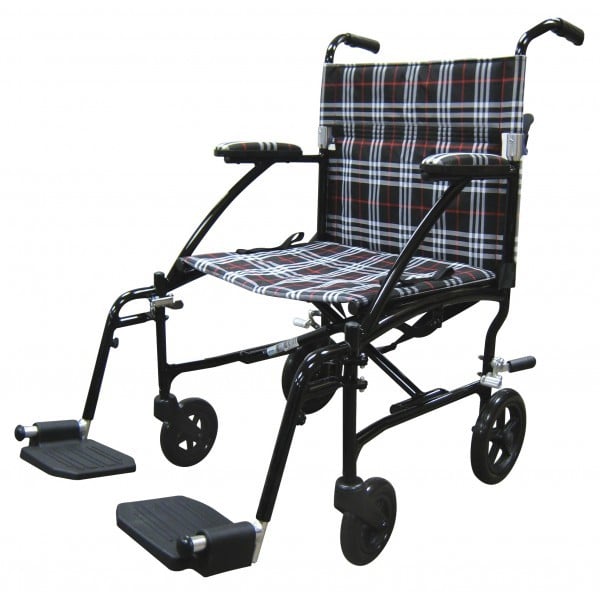
Any manual wheelchair under 30 lbs qualifies as lightweight. Ultra-lightweight models weigh under 20 lbs, with some coming in at just 16 to 18 lbs. Under Medicare's classification system, lightweight chairs (K0003) weigh 34 to 36 lbs, high-strength lightweight (K0004) weigh under 34 lbs, and ultralightweight (K0005) weigh under 30 lbs and include an adjustable rear axle plus a lifetime frame warranty. Each tier affects what insurance will cover, so the classification matters.
Unlike transport chairs, lightweight wheelchairs retain large rear wheels for self-propulsion. This makes them suitable for active or semi-active users who also need a chair that caregivers can manage more easily, offering practical benefits for both user and caregiver.
Frame material plays a major role here. Aluminum delivers roughly the same structural strength as steel at about one-third the weight, and it does not rust because it forms a natural protective oxide layer. Aluminum is the dominant material in modern lightweight chairs. Carbon fiber goes further: research from the NIH shows that carbon fiber frames transmit significantly less whole-body vibration than aluminum or titanium, reducing fatigue during extended use. That is a key differentiator for premium models.
One more trade-off to understand: folding frames are more portable and easier to load into vehicles. Rigid frames offer meaningfully better propulsion efficiency because less energy is lost through frame flex. For users who self-propel regularly, that efficiency difference is worth considering.
How to Size a Wheelchair Correctly (Before You Buy)
Ill-fitting wheelchairs are the most common source of buyer regret, and the consequences go well beyond discomfort. A poorly sized chair can cause pressure sores, spinal misalignment, and circulation problems. Getting the fit right the first time is not optional.
Seat width: Measure at the widest point of the hips when seated, then add 1 to 2 inches for comfort. A chair that is too narrow causes pressure sores. One that is too wide makes self-propulsion inefficient and strains the shoulders.
Seat depth: Measure from the back of the buttocks to the back of the knee, then subtract 2 inches. Too deep cuts off circulation behind the knees. Too shallow fails to distribute weight properly.
Footrest height: Footrests should sit approximately 2 inches off the ground. This prevents the thighs from bearing excess weight and helps maintain proper posture.
Caregiver ergonomics matter too. Push handle height should allow the caregiver to push with elbows slightly bent, not hunched over or reaching up. Adjustable push handles are a meaningful feature for households where multiple people share caregiving duties.
A few accessory decisions also interact with sizing and should be considered at purchase, not as afterthoughts:
- Desk-length armrests allow closer table access than full-length armrests
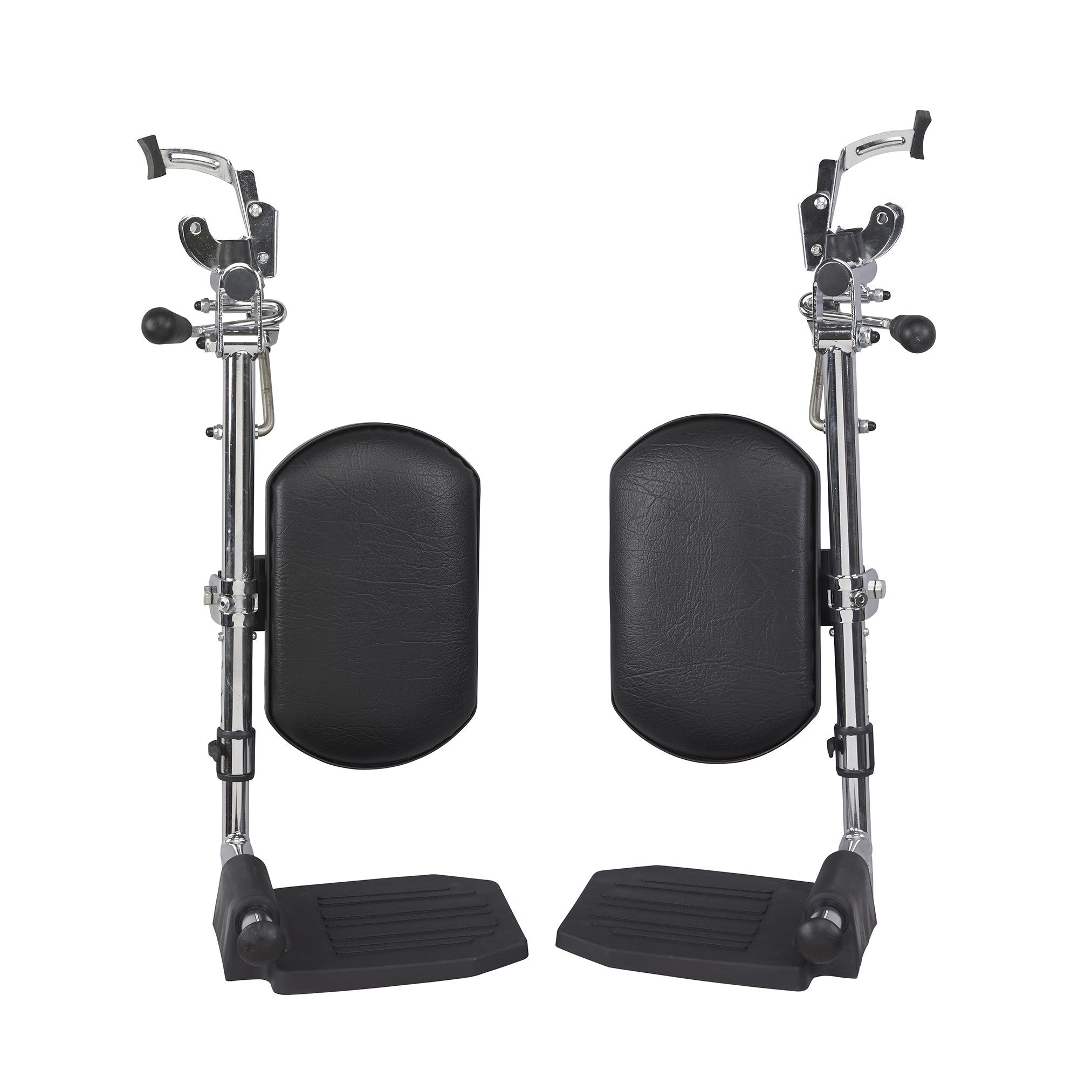
- Swing-away footrests make transfers in and out of the chair easier
- Anti-tip wheels add safety for new users on inclines
- Seat cushions are essential for pressure relief during extended sitting
Medicare Coding and Insurance: What First-Time Buyers Need to Know
Medicare uses HCPCS codes to classify manual wheelchairs by weight, capacity, and features. These codes directly determine what Medicare will cover and what documentation your doctor must provide. Here is the breakdown in plain English:
- K0001: Standard wheelchair, over 36 lbs
- K0003: Lightweight, 34–36 lbs
- K0004: High-strength lightweight, under 34 lbs
- K0005: Ultralightweight, under 30 lbs, adjustable rear axle, lifetime frame warranty
- K0006: Heavy duty (bariatric), supports up to approximately 300 lbs
- K0007: Extra heavy duty, supports up to 1,000 lbs
Transport wheelchairs fall under separate codes: E1037, E1038, and E1039. These require specific documentation that the user cannot self-propel and has a caregiver available. Confirm this documentation with your physician before purchasing.
The key takeaway: ask your doctor or supplier which code applies to your situation before you buy. Purchasing the wrong category can affect your reimbursement. Speaking with a knowledgeable product specialist before purchasing can help clarify which category fits your needs and insurance situation, and that conversation costs nothing.
Which Manual Wheelchair Is Right for You? A Quick Decision Framework
Use this as a starting point:
- The user cannot self-propel and has a reliable caregiver for all outings: Transport wheelchair
- The user needs to self-propel and spends significant time in the chair: Standard or lightweight wheelchair
- Caregiver burden and vehicle loading are primary concerns, and the user can self-propel: Lightweight or ultra-lightweight wheelchair
Consider whether the need is short-term or long-term. Research from the National Health and Aging Trends Study shows that the majority of new mobility device use among older adults lasts less than one year. For temporary needs like post-surgery recovery, a foldable lightweight model offers the best flexibility and resale value. For long-term primary use, investing in proper fit and the right category pays off in health outcomes.
If the user's weight exceeds 250 lbs, standard K0001 chairs are not appropriate. K0006 and K0007 classifications exist precisely for this, and bariatric needs are a normal part of the checklist.
Drive Medical and Karman Healthcare are among the leading manufacturers offering options across all categories discussed here. We carry their full lines along with other trusted brands.
Our strongest recommendation: call a live product specialist before purchasing, not after. Confirm chair type, sizing, and insurance eligibility with someone who does this every day. Our US-based specialists are available by phone six days a week, and the guidance is free.
The Right Chair Changes Everything
The difference between a transport, standard, and lightweight wheelchair is not cosmetic. It determines whether a user can maintain independence, how much physical strain falls on a caregiver, and whether the chair supports or harms long-term health.
Proper sizing is just as important as chair type. Both decisions are worth getting right the first time. With over 22 years of experience helping customers find the right fit (serving since 2001), more than 5,000 verified customer reviews, and a Lowest Price Guarantee, we are here to make sure you do not end up with the wrong chair in the garage.
Call our US-based product specialists six days a week for personalized guidance before you purchase. It costs nothing, and it can save you from a costly mistake. With the right information and the right chair, mobility limitations do not have to mean loss of independence.
Sources
- Demographic Profile of Older Adults Using Wheeled Mobility Devices — PMC/NIH
- How Many Wheelchair Users Are There in the US? — RetirementLiving.com
- Manual Wheelchair Bases — CMS Medicare Policy Article A52497
- Standard Wheelchair Dimensions — QueenDimensions.com
- Effect of Wheelchair Frame Material on Users' Mechanical Work and Transmitted Vibration — NIH/PubMed Central
- Incidence and Dynamics of Mobility Device Use Among Community-Dwelling Older Adults — NIH/PubMed Central


