
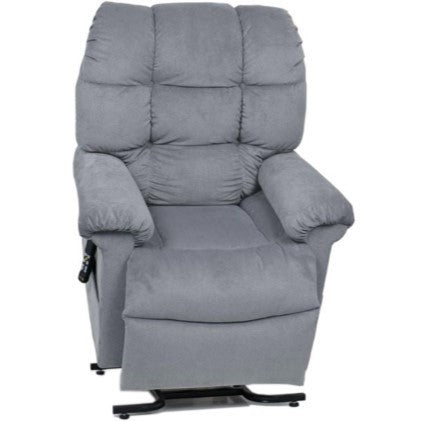
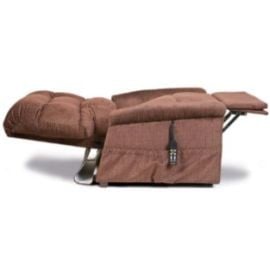
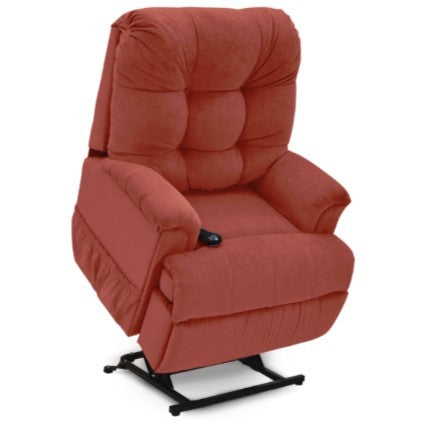
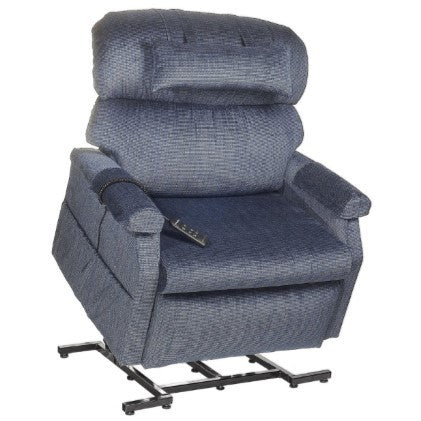

Why the Wrong Size Lift Chair Can Actually Be Dangerous
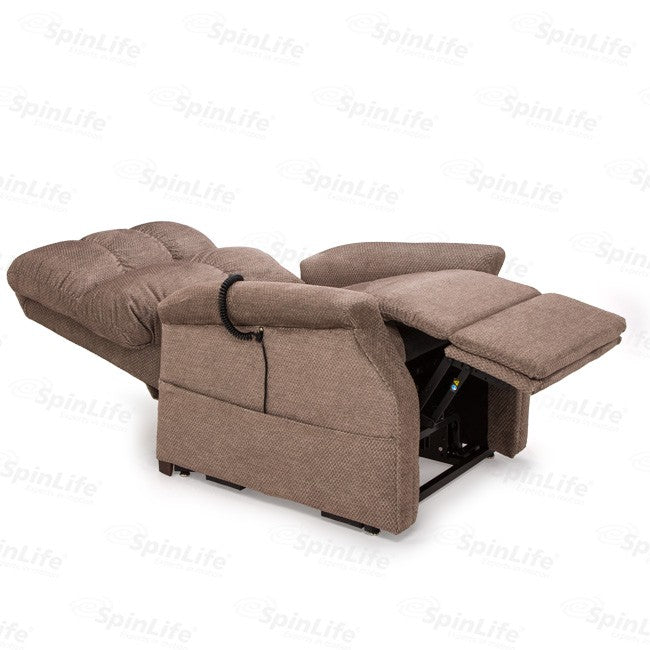
A lift chair that doesn't fit correctly is more than an inconvenience. It can cause pressure sores, restrict circulation behind the knees, and increase the likelihood of a fall during the lift cycle. For a petite user, a seat that sits too high can push them past a safe standing angle, making the chair's primary safety feature work against them.
Seat depth matters just as much. A seat that's too deep robs a petite user of lumbar support because the lower back never contacts the backrest. A seat that's too shallow concentrates pressure behind a tall user's knees, cutting off blood flow.
These aren't hypothetical risks. According to the National Council on Aging's 2025 National Falls Prevention Action Plan, approximately 14 million Americans aged 65 and older fall each year. A properly fitted lift chair is a preventive tool, not just a comfort product. Precise measurement should come before you ever browse a product page.
The Four Measurements That Actually Determine Fit
The most common sizing mistake is comparing chair specifications without first measuring the person who will sit in it. Before you look at a single product, gather these four numbers.
Measurement 1: Popliteal Height
This is the distance from the back of the knee (the popliteal crease) to the floor while seated. It's the single most critical measurement because it determines whether the user's feet rest flat on the floor during the lift function. If the feet dangle or the knees are pushed up, the chair cannot lift safely.
To measure: have the person sit in a firm, flat chair (a dining chair works well) with feet flat on the floor and knees bent at 90 degrees. Measure from the crease behind the knee straight down to the floor.
Measurement 2: Seated Hip Width
Measure across the widest point of the hips while seated, then add 1 to 2 inches for comfort. This number determines the seat width you need and can flag whether a bariatric model is necessary. Standard lift chair seats range from about 20 to 24 inches; users who need 26 inches or more should look at wide or bariatric options.
Measurement 3: Seat Depth
Measured from the back of the buttocks to the bend of the knee while seated. This tells you whether the user's lumbar spine will stay in contact with the backrest. Too deep, and the lower back floats unsupported. Too shallow, and the thighs lose support while pressure builds behind the knees.
Measurement 4: Torso/Back Height
Measured from the seat surface to the top of the head while seated. This determines whether the backrest and headrest align correctly with the user's spine and neck. A mismatch here can cause neck strain and reduce the chair's effectiveness in a reclined position.
Caregivers often need to take these measurements on behalf of the user. Position the senior in a firm dining chair with feet flat on the floor and back straight. A flexible tape measure and a notepad are all you need. Record each number before you call or shop.
Sizing for Petite Seniors (5'4" and Under)
A petite lift chair is not simply a cosmetically smaller version of a standard model. It has a different frame geometry. Seat-to-floor height on a petite model is typically around 18 to 19 inches (compared to about 20 inches on a standard chair). Seat depth runs approximately 19 to 20 inches, and back height is usually 22 to 24 inches versus 25 to 27 inches on standard models.
Why does this matter so much? A standard chair with a seat depth of 22 or more inches will cause a petite user's lower back to lose contact with the backrest entirely. That eliminates lumbar support and creates a forward-slide risk during the lift cycle. The shorter back height on petite models also ensures proper head and neck alignment, which a taller backrest would compromise for a smaller user.
Here's a detail many families overlook: seniors often lose height as they age. According to the Baltimore Longitudinal Study of Aging, women lose an average of 2 inches of height between ages 30 and 70, and up to 3 inches by age 80. Men lose just over 1 inch by 70 and 2 inches by 80. A senior who has always been 5'6" may now measure 5'3". Always measure current height rather than relying on remembered height.
If the senior already owns a recliner that fits well, measuring that chair's seat width, depth, seat-to-floor height, and back height provides a reliable baseline for matching a lift chair. Golden Technologies, one of the industry-leading brands we carry, offers a Petite Small category specifically engineered for users 5'5" and under, reflecting how seriously the industry treats these size distinctions.
Sizing for Tall Seniors (5'7" and Above)
For tall users, the most overlooked measurement is footrest extension length. A chair with an insufficient footrest leaves the calves unsupported when reclined, concentrating pressure behind the knees and reducing circulation. Tall lift chairs designed for users 5'7" to 6'2" typically feature seat heights around 21 inches, back heights of 28 to 29 inches, and footrests that extend 5 or more inches beyond standard models.
When evaluating a tall model, verify that the fully extended footrest reaches the user's heels, not just mid-calf, when the chair is in full recline. This simple check prevents a common and uncomfortable sizing error.
Room planning is part of the fit equation, too. Pride Mobility recommends a minimum of 13 inches of clearance between the chair and the wall, but tall models with longer recline arcs may require up to 21 inches. Measure the intended space before purchasing.
A word of caution: don't size by standing height alone, especially for users over 70. Kyphosis (a forward rounding of the upper spine) affects 20 to 40% of older adults, according to Physiopedia. A tall senior with pronounced spinal curvature may need a shorter back height than their standing height suggests. Seated torso measurement is far more reliable.
For users over 6'2", weight capacity and seat width must also be verified. Golden Technologies' Tall/Wide category supports up to 600 lbs, illustrating how tall sizing and bariatric sizing frequently overlap. Always confirm both dimensions.
The Kyphosis Factor: When Height Charts Aren't Enough
Age-related hyperkyphosis creates a forward-rounded upper back that changes the entire seated posture profile. A lift chair sized purely by standing height will often be wrong for these users because their seated torso height and support needs differ significantly from what a height chart predicts.
A backrest that is too tall or too straight can push the head forward uncomfortably, causing neck strain and reducing the effectiveness of the lift function. For seniors with kyphosis, the torso/back height measured while seated is far more reliable than standing height for determining backrest needs.
An adjustable or contoured headrest becomes critical here. It accommodates the forward head position without forcing the neck into extension, which can be painful and counterproductive.
Caregivers measuring a senior with kyphosis should note the person's natural seated posture, not a forced upright position. The goal is to capture the true support profile the chair must accommodate. If you're unsure how to account for spinal curvature during the measurement process, our product specialists can walk you through it.
Your Pre-Purchase Measurement Checklist
Before you contact a specialist or start browsing, write down these five numbers:
- Popliteal height (back of knee to floor, seated)
- Seated hip width (widest point of hips, plus 1 to 2 inches)
- Seat depth (back of buttocks to bend of knee, seated)
- Torso/back height (seat surface to top of head, seated)
- Current standing height (measured, not remembered)
Take all seated measurements in a firm dining chair with feet flat on the floor. Avoid soft sofas or cushioned seats, which compress and skew the numbers.
If the senior cannot stand unassisted, record the seated measurements only and note any postural conditions such as kyphosis, scoliosis, or post-surgical swelling. Share these details when speaking with a product specialist so they can factor them into the recommendation.
If the senior already owns a recliner that fits comfortably, measuring that chair's seat width, depth, seat-to-floor height, and back height gives you a reliable secondary reference point.
With over 22 years of helping customers find the right fit, we know that getting the size right the first time prevents returns, discomfort, and safety risks. Our live, US-based product specialists are available six days a week by phone to walk you through the measurement process and match your numbers to the correct chair. Expert help is just a phone call away.


