

The Number on the Tag Isn't the Whole Story
A lift chair's published weight capacity is a structural safety specification. It reflects what the frame, motor, seat support, and lift mechanism are engineered to handle through repeated sit, recline, and rise cycles. It is not a comfort rating, and it is not a marketing label.
This distinction matters because power lift chairs are classified as FDA Class II Medical Devices. The specs printed on the tag carry regulatory weight. They exist to keep users safe, not to sell chairs.
This article walks you through how to read the weight capacity spec correctly, what it doesn't tell you, and how to avoid a costly (and often non-returnable) mistake.
Static Rating vs. Dynamic Load: The Distinction Most Buyers Miss
The published weight capacity on a lift chair is a static rating. It reflects the maximum load the chair can safely support when a person is sitting still, at rest. That number is tested under controlled, stationary conditions.
Real-world use is different. Every time someone sits down with momentum, shifts their weight to one side, leans forward to reach a remote, or pushes up from the armrest, the forces acting on the chair exceed the static number. These are called dynamic loads, and they can spike well above the user's actual body weight, even when that body weight is technically under the printed limit.
Here's a concrete example. A 300-lb user in a 325-lb rated chair is operating at near-maximum static stress. During the rising cycle, when the motor engages and the user's weight shifts forward and upward, the dynamic forces on the actuator and frame can push the mechanism beyond its design threshold. The chair may not fail immediately, but it is working harder than it was built to work.
What happens mechanically when a chair is repeatedly overloaded? The motor strains under excess torque. The actuator (the component that drives the lift and recline motion) wears prematurely. The frame develops fatigue at weld points and joints. Over weeks and months of daily use, these stresses compound until something gives.
This is why experienced product specialists recommend a capacity buffer. Rather than choosing a chair rated at or barely above the user's body weight, select one rated meaningfully higher. That buffer preserves the safety margin, reduces mechanical strain, and extends the chair's functional lifespan by years.
Total Load: It's Not Just the Person in the Chair
The rated capacity must account for everything on the chair at the time of use: clothing, blankets, a heavy winter coat draped over the back, a heating pad, or anything else left on the seat.
Consider this scenario: a 325-lb rated chair with a 310-lb user, a thick fleece blanket, and a winter coat across the armrest. That combination is already at or beyond the structural limit. The chair doesn't distinguish between a person and a pile of blankets. Load is load.
Daily usage frequency is another hidden variable. A chair used 10 or more times per day by someone near the weight limit degrades far faster than one used occasionally by a lighter user. The spec sheet doesn't reflect cumulative wear. It tells you the maximum, not how long the chair will last at that maximum under heavy daily cycling.
If you're a caregiver shopping for a loved one, factor in the user's typical seated habits. Do they keep a blanket on the chair at all times? Do they use it as their primary seat throughout the day? These details matter more than most buyers realize.
Understanding the Weight Capacity Tiers
Lift chairs generally fall into three capacity tiers, and the differences between them go well beyond the printed number.
- Standard: Approximately 250–350 lbs. These chairs use lighter-gauge steel frames and single-motor systems. They suit average-weight users who don't need reinforced construction.
- Heavy-duty: 375–400 lbs. These models add reinforced steel frames, wider seats, and more robust actuators. They're built for users who exceed standard limits but don't require full bariatric engineering.
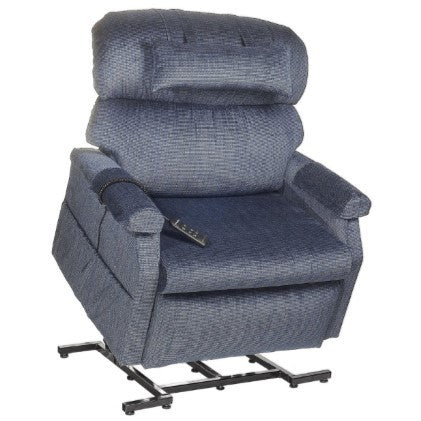
- Bariatric: 500–600 lbs or more. These are not simply scaled-up standard chairs. Bariatric lift chairs use heavy-gauge steel scissor-lift mechanisms, kiln-dried hardwood frames with integrated metal plates, and high-torque dual-motor systems specifically engineered for sustained heavy loads.
The need for higher-capacity chairs is far from niche. More than 4 in 10 U.S. adults (40.3%) have obesity. Adults aged 40–59, a core lift chair demographic, have the highest obesity prevalence at 46.4%. Adults 60 and older come in at 38.9%. A standard 250-lb chair is increasingly inadequate for a large share of buyers.
Severe obesity (BMI of 40 or higher) affects 9.4% of U.S. adults, with women at 12.1%. This population typically requires bariatric-rated chairs of 500 lbs or more.
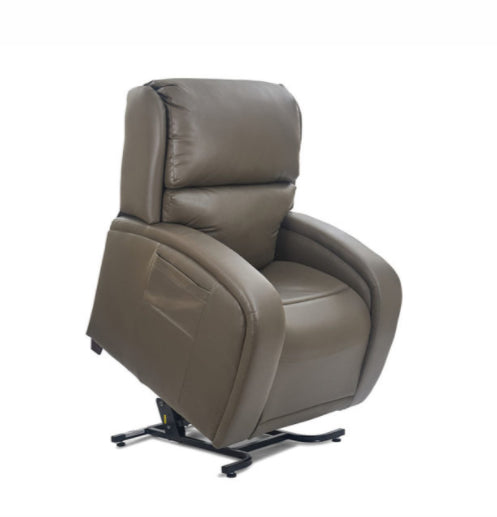
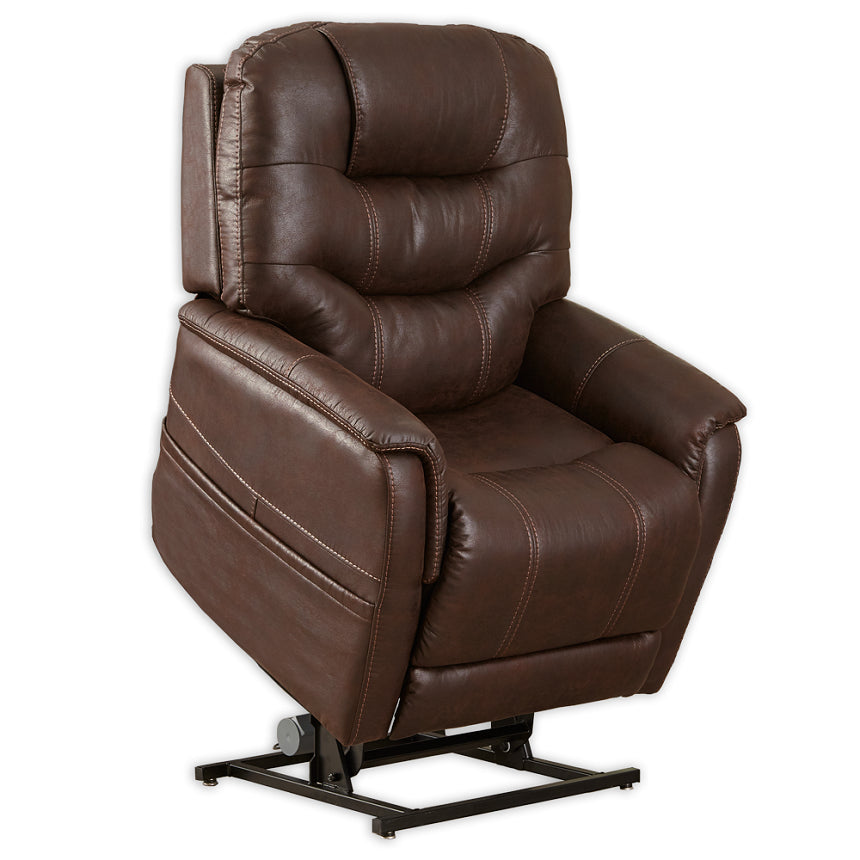
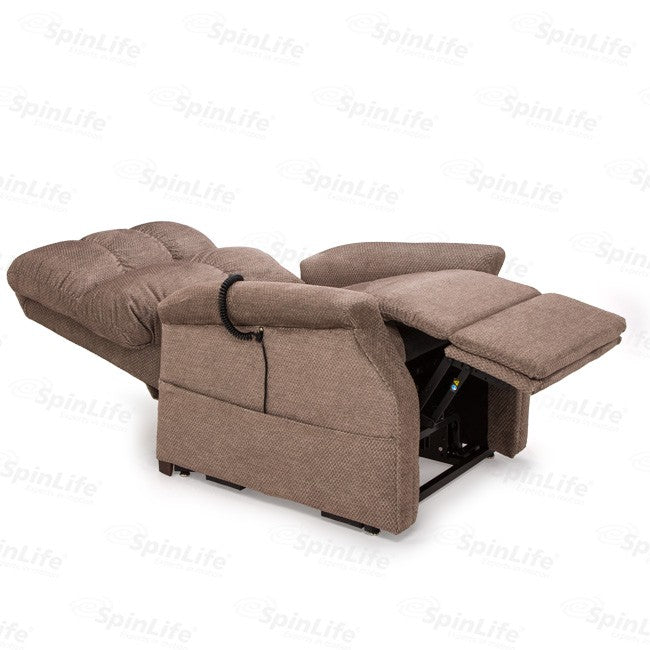
American Quality Health Products carries lift and massage chairs across all three tiers, including models like the Golden Technologies PR510 MaxiComfort and the Golden PR535 MaxiComforter Zero Gravity. A live, US-based product specialist can match you to the correct capacity tier rather than leaving you to guess from a spec sheet alone.
Weight Capacity Is Only One Part of the Fit Equation
A chair can meet its listed weight limit and still feel too narrow, too deep, or unstable for daily use. Capacity and fit are separate considerations, and both must be right.
Beyond weight capacity, evaluate these dimensions before buying:
- Seat width: Measured between the armrests. Too narrow causes pressure; too wide reduces lateral support.
- Seat depth: The distance from the front edge to the backrest. Incorrect depth can cause a user to slide forward during the lift cycle, undermining the fall-prevention benefit the chair is supposed to provide.
- User height and back height: The chair's back must support the user's full torso. A mismatch leaves the head and neck unsupported.
- Lift geometry: The angle and arc of the lifting motion must work with the user's body proportions.
This matters for safety. Falls are the leading cause of injury for adults 65 and older. Over 14 million older adults report falling every year, and fall-related deaths have risen 51% over the past decade. A correctly fitted lift chair is a genuine safety device. When the fit is wrong, the chair can contribute to instability rather than prevent it.
If you're shopping for someone else, measure the user's seated dimensions before comparing models. If the manufacturer's dimension charts are confusing, ask a product specialist to walk you through them.
The Hidden Costs of Getting It Wrong
A weight capacity mismatch doesn't always announce itself on day one. Motor burnout, accelerated frame wear, and actuator failure develop over weeks and months of daily use. By the time the problem becomes obvious, the warranty may no longer apply, particularly if the chair was used beyond its rated capacity.
Return policies add another layer of risk. Most online retailers will not accept returns on lift chairs customized with upgraded fabric, heat and massage features, or other add-ons. A buyer who discovers a capacity mismatch after delivery is often stuck with a chair that doesn't safely fit.
There's also a Medicare documentation angle worth understanding. Under Medicare Part B, only the lifting mechanism portion of a lift chair may be covered, and only if prescribed by a physician and deemed medically necessary. Correct weight capacity documentation may be required for insurance reimbursement. Choosing the wrong spec can create a financial problem on top of a safety one.
Treating the weight capacity spec as a serious safety parameter from the start, rather than a rough guideline, is the single most effective way to avoid these downstream costs.
How to Buy the Right Chair With Confidence
Before selecting a lift chair, work through this checklist:
- Identify the user's actual body weight.
- Add a meaningful capacity buffer above that number.
- Account for total load (blankets, clothing, items on the seat).
- Verify seat width, seat depth, and back height against the user's measurements.
- Consider daily usage frequency when choosing a capacity tier.
You don't have to figure this out alone. American Quality Health Products has served customers since 2001, with over 5,000 verified reviews and live, US-based product specialists available six days a week by phone. A Lowest Price Guarantee and 100% financing options help address affordability, particularly for bariatric models that carry a higher price point.
For bariatric configurations, or when shopping on behalf of a loved one who can't easily try a chair in person, call or contact a specialist before you order. Getting the specs right the first time is always easier than dealing with the consequences of getting them wrong.


