




Two Beds That Both Tilt — But Only One Is Built for Home Care
Both hospital beds and consumer adjustable bases let you raise your head and feet. On the surface, they look like they solve the same problem. For seniors, family caregivers, and home health patients, however, the differences between these two products can affect safety, insurance coverage, and long-term independence.
According to a 2025 Pew Research Center survey of 8,750 U.S. adults, 93% of seniors aged 65 and older live in their own homes, yet only about 1 in 10 U.S. homes has the accessibility features needed to support aging in place. The bed is one of the most consequential decisions a family will make.
This article covers four key differences: adjustability axes, safety standards, Medicare coverage, and caregiver ergonomics. If you have been resisting a hospital bed because it feels too clinical, modern options may surprise you. At American Quality Health Products, we have been helping families navigate these choices since 2001, and we have seen firsthand how much the equipment has improved.
What Each Bed Actually Does: Adjustability Is Not the Same
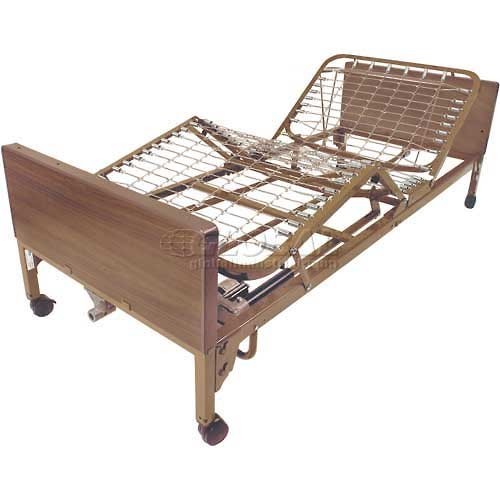
Here is the distinction most people miss: a hospital bed adjusts on three axes, while a consumer adjustable base typically adjusts on only two.
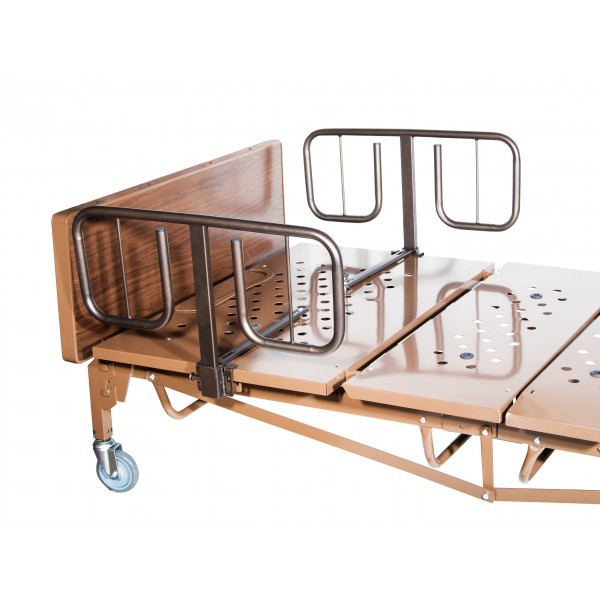
Both products let you raise and lower the head section and the foot section. A hospital bed also raises and lowers the overall bed height. This is called Hi-Lo adjustment, and it is the single most important feature separating these two categories.
Height adjustment controls how safely a patient gets in and out of bed. A bed that lowers close to the floor reduces fall risk. A bed that raises to working height lets a caregiver reposition a patient without bending or straining their back. Without Hi-Lo capability, every transfer becomes harder and riskier for everyone involved.
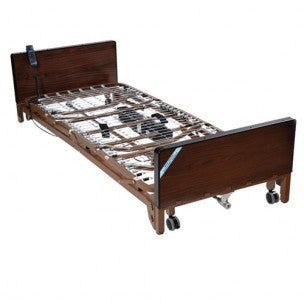
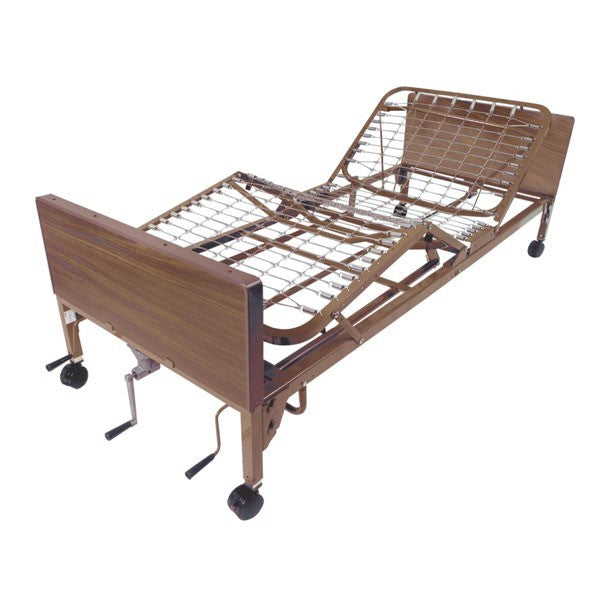
Hospital beds come in three main types:
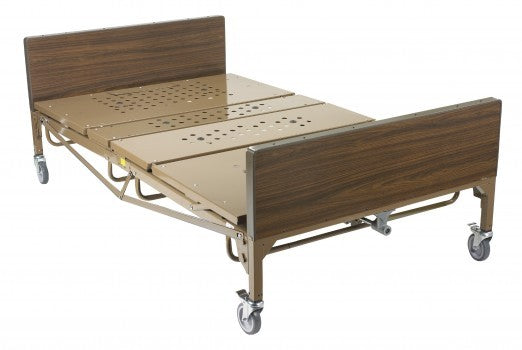
- Manual (hand-crank): All adjustments are mechanical. Best suited for patients with minimal repositioning needs and a caregiver who can operate the cranks.
- Semi-electric: Head and foot sections are motorized; height adjustment is manual. This is the most commonly Medicare-approved configuration (HCPCS code E0260).
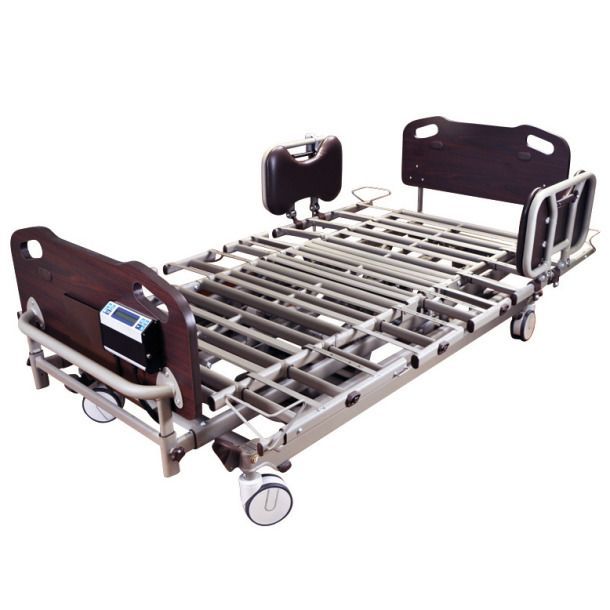
- Fully electric: All three axes are motorized. Ideal for patients who need frequent repositioning or who adjust the bed independently.
Consumer adjustable bases are built for comfort and lifestyle. They work well for people who want to read in bed, reduce snoring, or find a more comfortable sleeping position. They typically lack side rails, clinical-grade weight capacities, and any height adjustment.
There is also a regulatory difference worth knowing. Hospital beds are FDA-regulated Class II medical devices built to IEC 60601-2-52 safety standards, which specifically address fall prevention, entrapment risk, and patient stability. Consumer adjustable bases are not held to these requirements.
For patients with bariatric needs, hospital beds offer wider frames and higher weight capacities that standard adjustable bases cannot match.
Medicare Coverage: What It Pays For — and What It Doesn't
This is where many families get confused, and it is worth getting right before you spend a dollar.
Medicare Part B covers hospital beds as Durable Medical Equipment (DME) under Local Coverage Determination L33820. Consumer adjustable bases are not covered under any Medicare DME code.
Here is how the Medicare rental model works. Medicare uses a 13-month capped rental structure. After you meet the 2026 annual deductible of $283, Medicare pays 80% of the approved rental amount each month. You are responsible for the remaining 20% coinsurance. During the rental period, the supplier handles all maintenance and repairs. After 13 months of continuous rental, ownership of the bed transfers to you at no additional cost.
One important caveat: fully electric height adjustment is classified by Medicare as a convenience feature and is not reimbursed unless specific medical documentation justifies the need. Families who want this feature should be prepared for an out-of-pocket upgrade decision.
Common qualifying diagnoses for a Medicare-covered hospital bed include:
- COPD and congestive heart failure
- Severe arthritis, Parkinson's disease, ALS, and multiple sclerosis
- Stroke recovery and post-surgical positioning needs
- Pressure injuries (existing or high risk)
- Dysphagia with aspiration risk
Under 2026 prior authorization rules, standard DME review is now capped at seven calendar days, making the process faster for qualifying patients.
We always encourage families to speak with one of our product specialists before purchasing. Understanding which bed type aligns with your coverage can save you hundreds of dollars and considerable frustration.
Caregiver Safety: The Angle Most Articles Miss
Most comparison articles are written from the patient's perspective. If you are the adult child lifting your parent out of bed every morning, or the spouse helping with repositioning through the night, the bed you choose directly affects your body too.
Hi-Lo height adjustment is a caregiver's most important ergonomic tool. Raise the bed to a comfortable working height for repositioning, wound care, or changing linens. Lower it when the patient needs to get out safely. Without this feature, caregivers bend, twist, and strain, and back injuries follow.
This matters more than ever. The U.S. Bureau of Labor Statistics projects approximately 718,900 annual job openings for home health and personal care aides through 2034. That shortage means family members are increasingly the primary hands-on caregivers, making their physical health a priority, not an afterthought.
The fall statistics reinforce this point. More than 14 million adults age 65 and older report falling each year, resulting in over 3 million ER visits. Proper bed height at the moment of transfer is a documented prevention factor, and the estimated medical cost of nonfatal senior falls now exceeds $80 billion annually.
A consumer adjustable base, without height adjustment or side rail compatibility, places more physical burden on the caregiver and increases the patient's fall risk during every transfer. Hospital beds are designed around caregiver workflow, not just patient comfort.
Pressure Ulcer Prevention: Why Repositioning Features Matter
Pressure ulcers affect over 2.5 million Americans every year, with the highest rates among adults over 70. Nearly 95% of these cases are considered preventable with proper equipment and repositioning protocols.
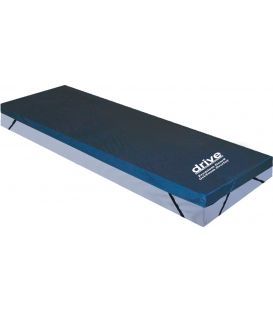
A hospital bed paired with a compatible alternating-pressure mattress functions as a prevention system. A 2021 Cochrane overview found that alternating pressure air surfaces may reduce pressure ulcer incidence by approximately 39 fewer people per 1,000 compared to standard foam surfaces, a meaningful clinical difference for patients who spend extended time in bed.
For immobile or semi-mobile patients, an adjustable base cannot fill this role. Without clinical-grade repositioning range, side rail support for turning, and compatibility with therapeutic mattress surfaces, it is not a substitute for a hospital bed in high-risk scenarios. If your loved one is at risk for pressure injuries, the bed choice is a medical decision, not a comfort preference.
The Dignity Factor: Modern Hospital Beds Don't Look Like Hospital Rooms
Many seniors resist hospital beds because they feel like a signal that independence is slipping away. That reaction is completely understandable, and it deserves a direct response.
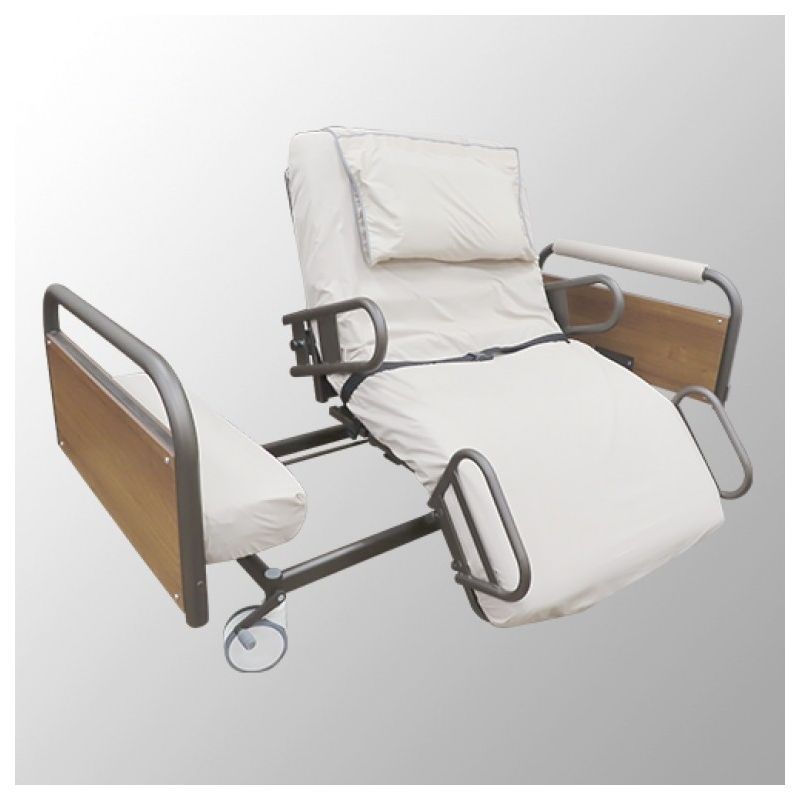
The home medical bed market has changed significantly. A growing category of hybrid or crossover beds combines full medical functionality with residential aesthetics: wood-tone finishes, upholstered headboards, and lower-profile frames that look like they belong in a bedroom, not a facility. According to Market Growth Reports, 34% of new homecare bed launches in 2025 included AI-based positioning systems, reflecting a shift toward smart, connected beds that feel less institutional and more like modern furniture.
Choosing a hospital bed is not giving up independence. It is protecting it. The right bed enables aging in place rather than a move to a facility. If aesthetics are a concern, ask one of our product specialists about options that meet medical requirements while fitting the look and feel of a real bedroom.
How to Choose: A Simple Decision Framework for Seniors and Families
Here is a straightforward way to think about the decision:
Choose a hospital bed if:
- The patient has a qualifying medical condition (COPD, heart failure, Parkinson's, pressure injuries, etc.)
- A caregiver assists with transfers, repositioning, or wound care
- The patient is at risk for pressure ulcers or falls
- A physician has ordered a hospital bed for home use
Choose a consumer adjustable base if:
- The primary goal is comfort, better sleep, or mild positioning support
- The individual is otherwise mobile and independent
- No caregiver-assisted transfers are needed
Medicare coverage eligibility is often the deciding factor. Verify your coverage before purchasing either product. For out-of-pocket purchases, 100% financing options are available through third-party providers, and free shipping on orders over $100 helps reduce the overall cost.
Our live, US-based product specialists are available six days a week. With over 22 years of experience in home medical equipment and more than 5,000 verified customer reviews, the guidance you receive is grounded in real-world clinical and caregiving scenarios, not guesswork. We would rather help you find the right fit than make a quick sale.
The Right Bed Changes Everything — Here's Your Next Step
Hospital beds are medical devices built for safety, caregiver workflow, and Medicare eligibility. Adjustable bases are comfort products that serve a different purpose. Knowing which one your situation calls for can make the difference between aging safely at home and facing preventable complications.
Ninety percent of seniors want to stay home, according to national survey data. The right bed is one of the most important tools that makes that possible.
If you are ready to explore your options, our product specialists are here to help. Call us to discuss your specific situation, diagnoses, and caregiver needs. We can walk you through Medicare eligibility, help you compare hospital bed models from brands like Pride Mobility, Golden Technologies, and Drive Medical, and find the right solution for your home.
Every order is backed by our Lowest Price Guarantee, free shipping on orders over $100, and easy, hassle-free returns. We have been doing this since 2001 because we believe everyone deserves the right equipment to live safely and comfortably at home.
Sources
- Aging In Place Statistics 2026 — Retirement Living (citing Pew Research Center 2025)
- Home Hospital Bed vs. Adjustable Bed: How to Choose — Wishing Well Medical
- Does Medicare Cover Hospital Beds in 2026? — SlumberSource
- Medicare Coverage for Hospital Beds — 2026 Guide — SonderCare
- Medicare Criteria for Hospital Bed Coverage — Legal Clarity
- 10 Must-Know U.S. Home Care Industry Stats for 2025 — NCH Stats
- Aging In Place Statistics — RubyHome (citing CDC data)
- Managing Pressure Sores: A Caregiver's Prevention Guide — All Seniors Foundation
- Homecare Medical Beds Market Size, Growth Report 2035 — Market Growth Reports


