

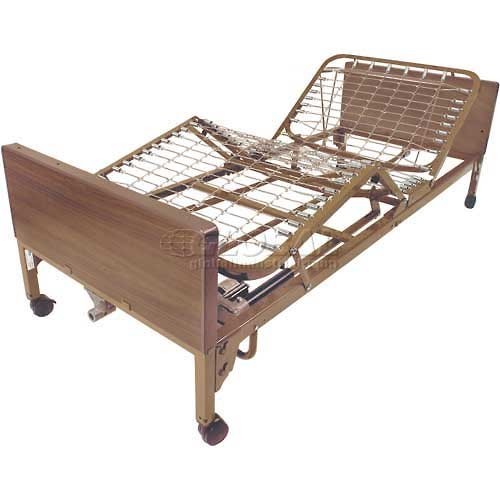
Best Hi-Low Bed for Home Use: How to Choose the Right Height
What Is a Hi-Low Bed—and Who Is It For?
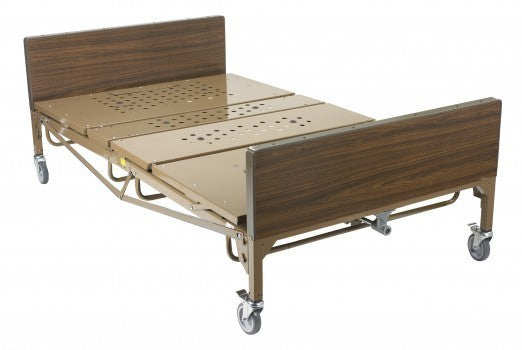
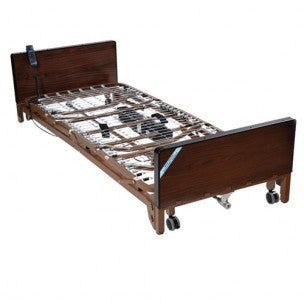
A hi-low bed is an adjustable bed that allows the entire sleeping platform to raise and lower, in addition to providing powered positioning such as head and foot adjustment.
That vertical movement is what distinguishes a true hi-low bed from many conventional adjustable beds.
For someone using a bed at home, the ability to change the entire bed height can be valuable for two very different reasons:
- Positioning the mattress at an appropriate height for getting into, out of or transferring from the bed
- Raising the bed to a more practical working height when a caregiver provides assistance
This combination of user transfer height and caregiver working height is one of the primary reasons people consider a hi-low bed for long-term home use.
American Quality Health Products offers hi-low beds from multiple manufacturers, ranging from residential-style adjustable beds to more traditional home-care and long-term-care designs.
Why Bed Height Matters
People sometimes shop for a hi-low bed by asking:
“Which bed goes the lowest?”
That's an important specification—but it isn't necessarily the right starting question.
The useful height depends on what the person needs to do at the bed.
For example, someone may need a lower mattress surface to place their feet securely on the floor before standing. Another person may need the bed raised to better match a wheelchair or transfer surface. A caregiver may want the bed considerably higher while providing bedside assistance.
The best hi-low bed therefore isn't automatically the model with the lowest minimum height.
It's the bed that provides the usable height range appropriate for the person, their transfers and their caregiving needs.
Deck Height and Mattress Height Are Not the Same
This is one of the most important specifications to understand when comparing hi-low beds.
Manufacturers may list the minimum and maximum height of the bed deck—the platform supporting the mattress.
But the person sits, sleeps and transfers from the top of the mattress.
If a bed has a minimum deck height of 10 inches and you place a 6-inch mattress on it, the approximate top-of-mattress height becomes 16 inches.
So before comparing two beds, consider:
- Minimum deck height
- Maximum deck height
- Mattress thickness
- Approximate minimum top-of-mattress height
- Approximate maximum top-of-mattress height
For transfer purposes, those final two measurements may be more useful than the deck-height specification alone.
Hi-Low Bed vs. Adjustable Bed: What's the Difference?
The terms adjustable bed and hi-low bed are sometimes used loosely, but there is an important distinction.
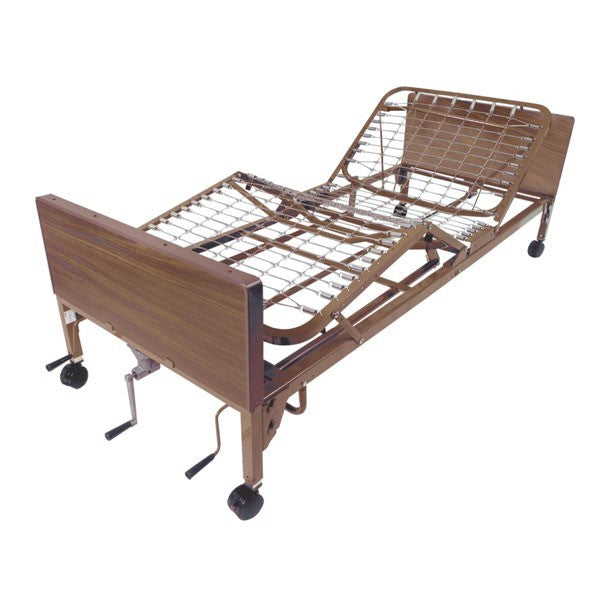
A conventional adjustable bed generally allows the head and foot sections to change position while the overall bed height remains relatively fixed.
A hi-low bed also allows the entire sleeping platform to move vertically.
That additional movement can make a significant difference when the bed is being chosen for:
- Transfers
- Wheelchair access
- Bed entry and exit
- Caregiver assistance
- Long-term home care
Someone primarily interested in changing sleeping positions for comfort may not need a hi-low bed.
But when height itself is part of the problem, powered vertical adjustment becomes much more important.
Don't Choose a Hi-Low Bed by Height Alone
Height range is important, but it shouldn't be the only specification you compare.
Also consider:
- Sleeping width and length
- Weight capacity
- Head and foot positioning
- Mattress compatibility
- Overall bed dimensions
- Residential versus medical-style appearance
- Rails or assist-device options
- Controls and convenience features
- Delivery and setup requirements
- Warranty and optional protection
- Available bedroom space
A bed with the ideal minimum height may still be the wrong bed if it doesn't provide the required width, capacity, positioning, appearance or other features.
Choose the height range first based on the person's needs—then compare the beds that provide that range and the other functions required.
Start With the Person, Not the Specification Sheet
Before comparing individual hi-low beds, ask:
- How does the person currently get into and out of bed?
- What is the current top-of-mattress height?
- Is that height comfortable for transfers?
- Does the person use a wheelchair or another transfer surface?
- Does a caregiver regularly assist?
- Does the bed need to lower substantially for the user?
- How high would a caregiver like the bed to rise?
- Is residential appearance important?
- What sleeping width is preferred?
- What weight capacity is required?
- How much room is available?
Those answers provide a much better starting point than simply searching for the bed with the largest height range.
American Quality Health Products can then help you compare hi-low beds whose specifications more closely match those requirements.
The best hi-low bed is not necessarily the one that goes highest or lowest. It's the one whose height range and features best fit the person who will use it.
How Low Should a Hi-Low Bed Go?
There is no single minimum bed height that is right for everyone.
The appropriate height depends on why the bed needs to lower in the first place.
For someone who gets out of bed by sitting at the edge and standing, the important measurement may be the height at which they can place their feet securely and rise comfortably.
For someone transferring to a wheelchair, the relationship between the mattress surface and wheelchair seat may be more important.
And when the primary concern involves keeping the sleeping surface very close to the floor, an ultra-low bed may deserve consideration.
The goal isn't to buy the lowest bed available. The goal is to determine the useful height range for the person who will actually use it.
Start With the Current Bed
Before shopping, measure the person's current bed from the floor to the top of the mattress.
Then ask:
- Is the current height comfortable for getting into bed?
- Can the person place their feet securely when sitting at the edge?
- Is standing from that height manageable?
- Is the bed too high?
- Is it too low?
- Would different heights be useful at different times?
- Does the person transfer to a wheelchair or another surface?
If the current height works well for transfers, you now have a useful reference measurement.
If it doesn't work well, identify why before choosing the replacement.
Minimum Deck Height Isn't Minimum Transfer Height
Suppose one bed has a minimum deck height of 9 inches and another has a minimum deck height of 12 inches.
At first glance, the 9-inch bed appears substantially lower.
But add a 7-inch mattress and the approximate minimum top-of-mattress heights become:
- 16 inches for the 9-inch deck
- 19 inches for the 12-inch deck
Those are the surfaces from which the person will actually sit or transfer.
This is why comparing advertised minimum heights without considering the mattress can lead to the wrong conclusion.
For transfer purposes, calculate the approximate top-of-mattress height—not just the bed's deck height.
When Does an Ultra-Low Bed Make Sense?
An ultra-low bed is designed to bring the sleeping surface substantially closer to the floor than many conventional hi-low beds.
That may be worth investigating when very low positioning is an important requirement.
But ultra-low capability shouldn't automatically be treated as a feature everyone needs.
Someone who primarily needs a practical transfer height and higher caregiver working position may be better served by a conventional hi-low bed with the appropriate overall height range.
Ultra-low and hi-low beds overlap, but they aren't necessarily being selected for exactly the same reason.
Low for the User, Higher for the Caregiver
One of the major advantages of powered hi-low adjustment is that the bed doesn't have to remain at one height.
It can be lowered to a height appropriate for the user's particular needs and then raised when another person provides bedside assistance.
That can be useful for activities such as:
- Repositioning
- Dressing
- Bedding changes
- Personal care
- Assisting with transfers
This is why the maximum height matters too.
A shopper who compares only minimum heights may overlook half of the reason for choosing a hi-low bed.
Wheelchair Transfers Require Their Own Measurements
If the person transfers between the bed and a wheelchair, measure both surfaces.
Record:
- Wheelchair seat height
- Current top-of-mattress height
- Current mattress thickness
- Preferred transfer height, if known
- Whether the person stands during the transfer
- Whether a transfer board or other equipment is used
- Whether another person assists
Don't assume that matching the bed and wheelchair at exactly the same height is always the correct approach. Transfer methods vary.
The important point is to choose a bed whose available height range can support the person's established transfer needs.
Don't Forget Mattress Compression
Published mattress thickness gives you a useful estimate of top-of-mattress height, but the actual surface may compress when the person sits or lies on it.
The amount depends on the mattress construction and the user's weight.
You don't need to calculate this precisely when initially comparing beds, but it's another reason not to treat a manufacturer's deck-height number as the person's exact transfer height.
How High Should the Bed Go?
The upper end of the range deserves just as much attention.
Ask:
- Will a caregiver regularly assist at the bedside?
- Will the bed be used for dressing or repositioning?
- Does the caregiver need a higher working surface?
- Does the bed provide enough adjustment between the user's preferred position and caregiver working height?
For long-term home care, a bed that provides a useful range at both ends can be more valuable than one chosen solely because it has the lowest minimum specification.
The Right Height Is a Range, Not a Number
When comparing hi-low beds, don't search for one perfect height.
Instead, identify a range that accommodates:
- Getting into bed
- Getting out of bed
- Standing or transferring
- Wheelchair transfers, if applicable
- Sleeping and positioning
- Caregiver access
Then compare beds whose vertical adjustment covers those requirements.
The best height range is the one that works across the person's normal day—not simply the lowest number on a specification sheet.
What Type of Hi-Low Bed Is Best for Home Use?
There isn't one style of hi-low bed that is best for every home.
Two beds may both raise and lower electrically but differ substantially in appearance, sleeping surface, weight capacity, minimum height, positioning features and the type of user they are designed to support.
For most shoppers, it helps to divide hi-low beds into several broad groups.
Residential-Style Hi-Low Beds
Residential-style hi-low beds are designed to provide powered height adjustment while maintaining more of the appearance and comfort associated with a traditional bedroom.
Depending on the model, they may also provide:
- Powered head and foot positioning
- Multiple sleeping sizes
- Massage or comfort features
- Programmable or convenience controls
- Residential-style headboard or frame options
- Split configurations for couples
- Additional positioning features
These beds can be particularly attractive when the bed will remain in a primary bedroom for years and appearance and everyday comfort matter alongside mobility and caregiver access.
AQHP offers several premium residential-style hi-low options, including the Flexabed Hi-Low SL, Transfer Master Supernal Hi-Low, Transfer Master Valiant and Golden Passport Hi-Low.
We'll compare these options more closely later in this guide.
Traditional Home-Care Hi-Low Beds
Some customers prefer or require a bed designed more like traditional home-care or long-term-care equipment.
These beds may place greater emphasis on:
- Wide vertical height adjustment
- Caregiver access
- Medical-style accessories
- Rails and assist-device compatibility
- Durability
- Higher-capacity configurations
- Institutional or long-term-care functionality
For someone whose priorities are primarily functional rather than residential appearance, this type of design may make more sense.
The important distinction isn't whether one style is “better.” It is which design better matches the environment and the person's needs.
Ultra-Low Beds
Ultra-low beds extend the low end of the height range considerably closer to the floor.
They may be worth investigating when very low positioning is a primary requirement, rather than simply wanting a bed that raises and lowers.
Some ultra-low designs also provide substantial upper height adjustment, allowing the same bed to move from a very low position to a practical caregiver working height.
This category can include products such as the MedaCure Ultra Low bed and other low/ultra-low home-care designs.
Extra-Wide and Bariatric Hi-Low Beds
Some people need powered height adjustment and additional sleeping width or weight capacity.
These requirements should be evaluated separately.
A person may need:
- A wider sleeping surface without an unusually high weight capacity
- A higher weight capacity at a conventional width
- Both additional width and higher capacity
Available sizes may include 42-inch, 48-inch or other expanded sleeping widths depending on the bed.
Heavy-duty models may also differ in overall dimensions, mattress requirements, delivery considerations and available accessories.
Don't assume that “bariatric” automatically tells you the width you need. Compare width and weight capacity independently.
Hi-Low Beds for Couples
Some customers want the benefits of powered height and positioning while maintaining a shared bedroom arrangement.
Depending on the product, split configurations may allow each person to have more independent control over positioning.
But before choosing a bed for two people, consider:
- Overall room dimensions
- Each person's preferred sleeping width
- Whether both sides require hi-low functionality
- Independent positioning needs
- Mattress configuration
- Access on both sides of the bed
- Caregiver access, if applicable
The best solution may be different for a couple than for an individual using a dedicated home-care bed.
Medical Appearance vs. Residential Appearance
Appearance isn't merely cosmetic when a bed will become a permanent part of someone's home.
Some people are perfectly comfortable with a traditional hospital or long-term-care appearance.
Others strongly prefer a bed that looks more like ordinary bedroom furniture.
Neither choice is inherently better.
Ask whether the priorities are primarily:
- Maximum home-care functionality
- Residential appearance
- Comfort features
- Specialized positioning
- Caregiver access
- Very low height
- Higher capacity
- A combination of these
That answer can narrow the field considerably before comparing individual models.
Start With the Category Before the Brand
It's tempting to begin by comparing manufacturers.
But before deciding between brands, first determine whether the person needs a:
- Residential-style hi-low bed
- Traditional home-care hi-low bed
- Ultra-low bed
- Extra-wide or bariatric hi-low bed
- Specialized mobility-assistance bed
Once you've identified the appropriate category, comparing individual models becomes much more meaningful.
Choose the type of bed first. Then compare the manufacturers and models that solve that particular problem.
Comparing Residential-Style Hi-Low Beds for Home Use
For someone who wants powered height adjustment without the appearance of a traditional hospital bed, residential-style hi-low beds can be an attractive option.
American Quality Health Products offers several premium choices. While they share some capabilities, they shouldn't be viewed as interchangeable.
The right choice depends on priorities such as height range, positioning, sleeping size, appearance, comfort features, controls and long-term use.
Flexabed Hi-Low SL
The Flexabed Hi-Low SL combines powered head and foot positioning with powered height adjustment in a residential-style bed.
It may deserve consideration for someone who wants a bed that can function as an everyday bedroom sleep system while also providing the vertical adjustment useful for transfers and caregiver access.
Depending on the selected configuration and options, Flexabed can also provide comfort and convenience features beyond basic positioning.
Consider the Flexabed Hi-Low SL when residential appearance, everyday comfort and powered height adjustment are all important priorities.
Transfer Master Supernal Hi-Low
The Transfer Master Supernal Hi-Low is another premium residential-style option designed around adjustable positioning and powered bed-height control.
It may be particularly worth comparing when the bed is intended for long-term use in a home bedroom and the customer wants home-care functionality without automatically moving to a traditional hospital-bed appearance.
As with any hi-low bed, compare the actual height range, sleeping dimensions, mattress configuration and available options with the person's specific needs.
Consider the Supernal when you want to combine home-care functionality with a residential-style sleep system.
Transfer Master Valiant
The Transfer Master Valiant provides another approach to a residential-style full-electric hi-low bed.
It should be evaluated not simply by brand, but by how its dimensions, positioning capabilities, height adjustment and available configuration compare with the person who will actually use it.
For someone comparing several Transfer Master or premium residential beds, the details matter. A difference in height range, sleeping surface, controls or configuration may be more important than a difference in appearance.
Consider the Valiant as part of the comparison when powered hi-low functionality and a residential bedroom environment are both priorities.
Golden Passport Hi-Low
The Golden Passport Hi-Low gives shoppers another residential-style option for powered positioning and height adjustment.
It may be worth considering for customers who want the benefits of a hi-low bed while maintaining a less institutional appearance in the bedroom.
As with the other beds in this group, evaluate the complete configuration rather than choosing from appearance alone.
Consider the Golden Passport when comparing residential-style hi-low alternatives from multiple manufacturers.
Which Residential Hi-Low Bed Is Best?
There isn't a responsible universal answer.
Instead, compare the beds using the factors that matter to the person:
- Minimum and maximum height
- Actual top-of-mattress height
- Sleeping width and length
- Weight capacity
- Head and foot positioning
- Mattress choices
- Controls
- Comfort and convenience features
- Residential appearance
- Available accessories
- Delivery and setup
- Warranty and protection options
- Price and overall value
One customer may place the greatest importance on transfer height. Another may care more about sleeping width, appearance or long-term comfort. Someone receiving regular assistance may place greater emphasis on maximum caregiver working height.
That's why AQHP recommends starting with the person's requirements and then comparing models.
There is no advantage to paying for a feature the person doesn't need—and no bargain in choosing a less expensive bed that doesn't solve the problem.
Ask AQHP to Help Compare the Models
If you're deciding among Flexabed, Transfer Master, Golden or another hi-low bed, call American Quality Health Products with the person's measurements and priorities.
It is especially helpful to know:
- Current top-of-mattress height
- Preferred transfer height
- Wheelchair seat height, if applicable
- Sleeping width
- User weight
- Whether caregiver assistance is provided
- Desired comfort or convenience features
- Available bedroom space
Those details give us a much better basis for helping you compare the available models.
The best hi-low bed is the one that fits the person's actual needs—not simply the model with the longest feature list.
Traditional, Ultra-Low and Higher-Capacity Hi-Low Beds
Residential appearance isn't the highest priority for every customer.
Some people need a bed primarily for height range, caregiver access, very low positioning, additional width or higher weight capacity. In those situations, a more traditional home-care or long-term-care design may be the better fit.
These beds can provide capabilities that aren't always available in residential-style adjustable beds.
When a Traditional Home-Care Hi-Low Bed Makes Sense
A traditional home-care hi-low bed may deserve consideration when priorities include:
- A broad powered height range
- Frequent caregiver access
- Compatibility with rails or assist devices
- Medical-style mattress options
- Durability for long-term use
- Higher weight capacities
- Additional sleeping widths
- More specialized positioning or care requirements
For these customers, functionality may matter more than making the bed look like conventional bedroom furniture.
That doesn't mean a traditional-looking bed is automatically more capable. It means the design priorities are different, and those priorities should match the person who will use the bed.
When an Ultra-Low Bed Is the Better Fit
A conventional hi-low bed provides powered height adjustment, but some customers specifically need the sleeping surface to move much closer to the floor.
That's where an ultra-low bed becomes a separate category worth considering.
An ultra-low design may be appropriate to investigate when very low positioning is an important part of the person's requirements while still retaining the ability to raise the bed for positioning or caregiver access.
The important measurement remains the same:
How high will the top of the mattress actually be when the bed is at its lowest position?
Don't compare the frame specification alone. Mattress thickness still affects the final sleeping-surface height.
MedaCure Ultra Low Bed
The MedaCure Ultra Low Bed is an example of a bed designed specifically around a very low height range while retaining powered adjustment for home-care or long-term-care use.
It deserves consideration when ultra-low positioning is a genuine requirement rather than simply an attractive specification.
Before choosing it—or any ultra-low bed—compare its complete height range, mattress requirements, width, capacity, positioning features and available accessories with the person's needs.
Choose an ultra-low bed because the person needs its low-positioning capability, not simply because “lower” sounds better.
When Extra Width Is the Priority
Not everyone shopping for a larger bed requires extremely high weight capacity.
Some customers simply need more sleeping width.
A 42-inch or wider sleeping surface may provide substantially more room than a conventional hospital-bed width while still offering powered positioning and hi-low functionality, depending on the model.
When comparing wider beds, check:
- Actual sleeping-surface width
- Overall bed width
- Weight capacity
- Mattress dimensions
- Minimum and maximum height
- Available bedroom space
- Doorway and delivery-route dimensions
- Rail and accessory compatibility
Remember that a wider sleeping surface also creates a wider overall bed, which can affect caregiver access and available transfer space.
When Higher Weight Capacity Is the Priority
Weight capacity should be treated as its own requirement.
Don't choose capacity based only on the person's current weight. Consider the manufacturer's specifications for the complete bed system and compatible mattress.
Higher-capacity beds may also differ in:
- Frame construction
- Sleeping width
- Overall dimensions
- Mattress requirements
- Height range
- Available accessories
- Delivery requirements
This is why extra-wide and bariatric are related terms, but they don't always mean exactly the same thing.
The P503, P703 and P903 Family
The P503, P703 and P903 are related bed models that provide different width, capacity and configuration options as you move through the family.
Rather than treating them as three completely unrelated beds, it can be more useful to compare them as progressively different solutions within the same general platform.
The appropriate model depends on the required:
- Sleeping width
- Weight capacity
- Height range
- Mattress
- Available room space
- Caregiving requirements
The P903 may be particularly relevant when the requirement moves into a more bariatric-oriented configuration.
The important point is not to automatically move to the largest model.
Choose the width and capacity the person actually requires while also considering room space, transfers and caregiver access.
Width and Capacity Must Be Considered Together
Suppose one person needs additional sleeping room but only a moderate weight capacity.
Another person may require substantially greater capacity but not necessarily the widest available sleeping surface.
A third person may require both.
Those are three different buying situations.
Before comparing models, determine:
- Required sleeping width
- Required weight capacity
- Preferred height range
- Mattress requirements
- Room dimensions
- Transfer-space requirements
- Caregiver-access requirements
That information makes it much easier to determine which category and model deserve consideration.
Don't buy a bed based on the label “bariatric.” Buy the width, capacity, height range and features appropriate for the person.
How to Compare Hi-Low Bed Specifications
Once you've determined that a hi-low bed is the appropriate type of bed, the next step is comparing individual models.
It's easy to become overwhelmed by specification sheets. Instead of comparing every number at once, focus first on the specifications that directly affect transfers, sleeping comfort, caregiver access and whether the bed will work in the home.
1. Minimum and Maximum Height
Start with the bed's vertical adjustment range.
Ask:
- What is the minimum deck height?
- What is the maximum deck height?
- How thick will the mattress be?
- What will the approximate minimum top-of-mattress height be?
- What will the approximate maximum top-of-mattress height be?
Then compare those numbers with the person's actual transfer and caregiving requirements.
A bed that goes extremely low but doesn't rise high enough for the caregiver may not be ideal. Likewise, a bed with an excellent maximum working height may not lower sufficiently for the user's needs.
Evaluate the entire height range—not just the lowest number.
2. Sleeping Width
Hospital and home-care beds are available in different sleeping widths.
The appropriate width depends on the person's size, comfort preferences, mobility and available room space.
Consider:
- Sleeping-surface width
- Overall bed width
- Space required for rails or accessories
- Caregiver access
- Wheelchair or transfer space beside the bed
A wider bed can provide more sleeping room, but it also occupies more bedroom space.
3. Weight Capacity
Check the manufacturer's stated capacity for the bed and make sure the mattress is also appropriate for the intended user.
Don't assume that two beds with the same width have the same capacity.
Likewise, don't assume that a higher-capacity bed is automatically wider.
Width and weight capacity should always be checked separately.
4. Head and Foot Positioning
Most shoppers considering a premium hi-low bed will also want powered head and foot adjustment.
Compare what positions the bed can provide and how the controls operate.
Depending on the model, additional positioning may be available beyond basic head and foot elevation.
Ask whether those functions address a genuine need or are simply features that sound appealing.
5. Mattress Requirements
The mattress affects much more than comfort.
It can affect:
- Actual top-of-mattress height
- Transfer height
- Overall sleeping feel
- Pressure-management options
- Bed articulation
- Weight capacity
- Rail relationships
Before choosing a mattress, confirm that it is compatible with the bed and appropriate for the user's requirements.
6. Overall Bed Dimensions
The sleeping surface is only part of the bed's footprint.
Check the complete external dimensions, particularly for:
- Wider beds
- Residential-style frames
- Bariatric beds
- Beds with headboards or footboards
- Specialized home-care designs
Then measure the bedroom.
Allow room not just for the bed, but also for normal movement, caregiver access and transfers.
7. Rails and Assist Devices
Different users have different requirements for bedside rails, assist bars or other accessories.
Before ordering, determine:
- Which accessories are compatible with the bed
- Where they mount
- Whether they affect transfer access
- Whether they change the effective width of the bed
- Whether they interfere with wheelchair positioning or caregiver access
Accessory compatibility should be considered before the bed arrives, not afterward.
8. Controls and Convenience Features
Controls vary considerably among premium beds.
Depending on the model, features may include:
- Wired or wireless controls
- Preset positions
- Memory positions
- Massage
- Underbed lighting
- USB charging
- Voice or other convenience controls
These features can improve everyday usability, but they shouldn't overshadow the core requirements of height, positioning, width and capacity.
9. Bedroom Fit and Delivery Route
Measure:
- Bedroom dimensions
- Doorways
- Hallways
- Tight turns
- Stairs
- Elevator dimensions, if applicable
- Available space beside the bed
Large or heavy hi-low beds may require more delivery planning than a conventional adjustable bed.
A bed that fits the person's needs still has to fit through the home.
10. Delivery and Setup
Before ordering, understand how the particular bed will be delivered.
Depending on the model, size and destination, delivery may differ substantially.
Ask:
- How is the bed shipped?
- Will an appointment be required?
- How much assembly is involved?
- Who will move the bed into the bedroom?
- Is White Glove delivery/setup available for this model and location?
- What should be prepared before delivery?
For larger or more sophisticated beds, setup planning should be part of the purchase decision—not an afterthought.
11. Warranty and Protection
Finally, compare what happens after the purchase.
Review:
- Manufacturer warranty
- Parts coverage
- Labor coverage, if applicable
- Length of coverage
- Optional extended protection
- Who to contact if assistance is needed
The least expensive purchase price doesn't necessarily represent the best long-term value.
Build Your Shortlist From Requirements
Before comparing prices, write down the requirements the bed must meet.
For example:
- Required height range
- Required sleeping width
- Required weight capacity
- Positioning requirements
- Mattress requirements
- Necessary rails or accessories
- Bedroom-space limitations
- Delivery/setup requirements
- Desired comfort features
- Budget
Then eliminate beds that don't meet the essential requirements.
Only after that should you compare the remaining models on price, optional features and personal preference.
The goal isn't to compare every hi-low bed on the market. It's to identify the few beds that actually fit the person's requirements and compare those carefully.
How Much Does a Good Hi-Low Bed Cost?
Hi-low beds can vary substantially in price.
A shopper may find relatively basic home-care beds at one end of the market and sophisticated residential-style, ultra-low, extra-wide or higher-capacity beds at the other.
The difference isn't simply branding.
Price can reflect meaningful differences in height range, construction, size, weight capacity, positioning, appearance, controls, mattress configuration, accessories, delivery and warranty coverage.
For that reason, American Quality Health Products recommends determining what the person actually needs before comparing prices.
Why Do Hi-Low Bed Prices Vary So Much?
Several factors can affect the price of a hi-low bed:
- Bed design and construction
- Minimum and maximum height
- Sleeping width and length
- Weight capacity
- Residential versus medical-style design
- Head and foot positioning
- Additional positioning functions
- Mattress type
- Controls and convenience features
- Rails and accessories
- Headboard and footboard options
- Delivery requirements
- Setup requirements
- Warranty or optional protection
Two beds that both raise and lower may therefore be designed for very different users.
When Does a Premium Hi-Low Bed Make Sense?
Paying more can make sense when the additional cost provides functionality the person will actually use.
For example, a premium bed may be worth considering when:
- The bed will be used every day for many years
- A specific height range is required
- Residential appearance is important
- Additional positioning is valuable
- A larger sleeping surface is needed
- Higher weight capacity is required
- A caregiver regularly provides bedside assistance
- Specialized controls or convenience features are important
The key is connecting the additional cost to an actual requirement.
A premium feature has value when it solves a problem or meaningfully improves everyday use—not simply because it appears on the specification sheet.
When a Less Expensive Bed May Be Enough
The most expensive bed isn't automatically the best choice.
If the person needs straightforward powered head and foot positioning plus an appropriate hi-low range, a simpler model may provide everything necessary.
Likewise, there is little reason to pay for ultra-low capability if very low positioning isn't needed, or for substantially greater width or capacity than the person requires.
This is why identifying the person's essential requirements first can prevent both underbuying and overbuying.
Compare Complete Configurations, Not Just Starting Prices
A displayed starting price may not represent the final configuration the person needs.
Depending on the bed, the complete purchase may involve choices such as:
- Bed size
- Mattress
- Rails or assist devices
- Headboard or footboard
- Comfort options
- Controls
- Accessories
- Delivery
- Setup
- Protection plan
When comparing two beds, compare the configurations you would actually purchase.
A lower starting price isn't necessarily less expensive once the required options are included.
Consider Delivery and Setup Before Ordering
Delivery can be particularly important with larger hi-low, ultra-low and higher-capacity beds.
Before ordering, determine what type of delivery is included and what will happen when the bed reaches the home.
If the recipient cannot move or assemble a large bed—or if family members won't be available—an available White Glove delivery/setup option may be worth considering.
The best time to plan for delivery is before the order is placed, not when the freight carrier calls.
Consider Long-Term Value
If a bed will be used every night for years, purchase price is only one part of the decision.
Also consider:
- How well the bed fits the person's needs
- Whether the height range remains useful as needs change
- Construction and durability
- Mattress compatibility
- Manufacturer warranty
- Available protection options
- Ease of everyday operation
- Whether the bed fits the home environment
A bed that costs less but doesn't provide the required functionality may be poor value.
A more expensive bed that provides features the person never uses can also be poor value.
Value comes from matching the bed to the person's requirements—not simply choosing the lowest or highest price.
Ask AQHP to Compare Complete Options
If you've narrowed your choices to two or three hi-low beds, American Quality Health Products can help you compare the complete configurations.
Tell us the required height range, width, capacity, mattress needs, desired features and delivery requirements.
That makes it easier to compare what each bed actually provides rather than relying on starting prices alone.
First determine what the bed must do. Then compare the cost of the beds that actually meet those requirements.
Questions to Ask Before Buying a Hi-Low Bed
Before choosing a hi-low bed, bring the decision back to the person who will actually use it.
Specifications matter, but only when they relate to a real requirement.
These questions can help narrow the choices.
1. Why Does the Bed Need to Raise and Lower?
Start with the reason you're considering hi-low functionality.
Is the primary goal:
- Easier bed entry or exit?
- Better transfer height?
- Wheelchair transfers?
- Caregiver access?
- Very low positioning?
- A combination of these?
The answer helps determine which portion of the height range matters most.
2. What Top-of-Mattress Height Does the Person Need?
Don't compare deck heights alone.
Measure the current top-of-mattress height and determine whether it works well.
Then consider:
- Minimum bed deck height
- Mattress thickness
- Approximate minimum top-of-mattress height
- Maximum deck height
- Approximate maximum top-of-mattress height
Compare the surface the person actually uses—not just the frame underneath it.
3. Does the Person Transfer to a Wheelchair?
If so, measure the wheelchair seat height and understand the person's existing transfer method.
Ask:
- Does the person transfer independently?
- Do they stand during the transfer?
- Is a transfer board or other equipment used?
- Does another person assist?
- Would adjustable bed height improve the current transfer?
The wheelchair itself doesn't determine the correct bed. The transfer method does.
4. How Much Sleeping Width Is Needed?
Think about comfort and mobility, not simply what width the current bed happens to be.
A wider bed may be useful for someone who needs additional room to turn or reposition.
But greater width also affects:
- Overall bed dimensions
- Bedroom space
- Caregiver access
- Transfer space
- Mattress size
- Delivery route
Choose enough width for the person without unnecessarily compromising the space around the bed.
5. What Weight Capacity Is Required?
Check the bed and mattress specifications separately.
Don't assume a wider bed automatically provides the capacity required, and don't assume a higher-capacity bed must be the widest option.
Width and capacity are two separate buying decisions.
6. Is Residential Appearance Important?
Some hi-low beds are designed to look more like traditional bedroom furniture.
Others emphasize home-care or long-term-care functionality.
Ask whether the bed needs to blend into a primary bedroom or whether features such as very low height, specialized accessories or higher capacity are more important.
The answer can quickly narrow the field between residential-style and medical-style designs.
7. What Positioning Features Are Actually Needed?
Determine whether the person needs:
- Head elevation
- Foot elevation
- Additional positioning
- Preset positions
- Memory functions
- Massage or comfort features
- Other convenience controls
Separate essential positioning requirements from features that would simply be nice to have.
8. Will a Caregiver Regularly Assist?
If a caregiver provides bedside assistance, maximum bed height may be just as important as minimum height.
Consider activities such as:
- Repositioning
- Dressing
- Bedding changes
- Personal care
- Transfer assistance
The bed should work for the person at lower or transfer heights while also providing a practical working position when assistance is provided.
9. Will the Bed Fit the Bedroom and Delivery Route?
Measure before ordering.
Check:
- Bedroom dimensions
- Available space beside the bed
- Doorway width
- Hallways
- Tight turns
- Stairs
- Elevator dimensions, if applicable
Don't forget that the overall dimensions of the bed may be larger than the published sleeping-surface size.
10. Who Will Receive and Set Up the Bed?
Before ordering, know what happens on delivery day.
Ask:
- How will the bed be shipped?
- Will the carrier schedule an appointment?
- How heavy are the components?
- Is assembly required?
- Who will move the bed to the bedroom?
- Is White Glove delivery/setup available?
This is particularly important when the recipient lives alone or family members aren't nearby.
11. What Happens After the Purchase?
Review:
- Manufacturer warranty
- Parts coverage
- Labor coverage, if applicable
- Optional protection plans
- Who to contact for warranty assistance
A hi-low bed can be a long-term purchase, so support after delivery deserves consideration too.
12. What Are the Three Most Important Requirements?
Finally, force the decision down to three priorities.
For example:
- The mattress must lower to an appropriate transfer height.
- The bed must provide at least the required sleeping width.
- The bed must look appropriate in a primary bedroom.
Another customer might choose:
- Higher weight capacity.
- Maximum caregiver working height.
- Compatibility with required accessories.
Your priorities may be completely different.
Once the three non-negotiable requirements are clear, eliminating unsuitable beds becomes much easier.
Don't ask which hi-low bed is best for everyone. Ask which hi-low bed best meets the requirements of the person who will use it.
Why Buy a Hi-Low Bed From American Quality Health Products?
A hi-low bed can be a significant purchase, and the differences among models aren't always obvious from a product page.
American Quality Health Products has been helping customers purchase home medical and mobility equipment since 2001. We offer beds from multiple manufacturers, allowing customers to compare different designs, height ranges, sizes, capacities and features before choosing.
That matters because the best hi-low bed depends on the person—not simply the brand.
Compare Multiple Manufacturers
AQHP offers hi-low and adjustable beds from manufacturers including Flexabed, Transfer Master, Golden Technologies and other home-care bed manufacturers.
Instead of limiting the comparison to one product line, we can help customers look across different approaches, including:
- Residential-style hi-low beds
- Traditional home-care beds
- Ultra-low beds
- Extra-wide beds
- Higher-capacity and bariatric beds
- Specialized mobility-assistance beds
This allows the conversation to begin with the person's requirements rather than with whichever bed a single manufacturer happens to sell.
Tell Us What the Person Actually Needs
You don't need to know the exact model before contacting American Quality Health Products.
It is more useful to tell us:
- Why the bed needs to raise and lower
- Current top-of-mattress height
- Preferred transfer height
- Wheelchair seat height, if applicable
- Required sleeping width
- User weight
- Whether a caregiver regularly assists
- Whether very low positioning is important
- Whether residential appearance is important
- Required positioning features
- Available bedroom space
From there, we can help narrow the types and models worth comparing.
Compare the Complete Bed, Not Just One Specification
Customers sometimes begin with a single requirement:
“I need the lowest bed.”
“I need a 42-inch bed.”
“I need a bed that looks residential.”
Those are useful starting points, but none should necessarily determine the purchase by itself.
A bed also has to provide the appropriate combination of height, width, capacity, positioning, mattress compatibility, room fit and everyday usability.
AQHP can help you look at those requirements together.
Delivery and Setup Matter
A hi-low bed isn't always a product that can simply be left at the front door and carried upstairs later.
Depending on the model, size and destination, delivery arrangements can differ.
Before ordering, determine:
- How the bed will be delivered
- Whether a delivery appointment is required
- What assembly is involved
- Who will move the bed into the bedroom
- Whether White Glove delivery/setup is available for the selected bed and destination
For customers purchasing a bed for a parent or family member in another location, planning the delivery can be particularly important.
Warranty and Optional Protection
Warranty coverage also varies by manufacturer and product.
Review the manufacturer's warranty before purchasing and understand what is covered after delivery.
For eligible products, American Quality Health Products may also offer optional third-party protection plans that can extend parts-and-labor coverage beyond the standard manufacturer coverage.
Availability and terms should be confirmed for the particular product at the time of purchase.
Talk With a Knowledgeable Person Before Ordering
Online specifications are useful, but a conversation can be especially valuable when you're deciding among several expensive beds.
Call American Quality Health Products and describe the person's needs.
We can help you compare the relevant models and explain the differences before you order.
Our job isn't to convince you that one hi-low bed is best for everyone. It's to help you understand which options best match the requirements you've identified.
Frequently Asked Questions About Hi-Low Beds
What Is a Hi-Low Bed?
A hi-low bed is an adjustable bed that allows the entire sleeping platform to raise and lower electrically.
Most hi-low beds also provide powered head and foot positioning, but the vertical movement of the entire bed is what distinguishes them from many conventional adjustable beds.
This height adjustment can be useful for bed entry and exit, transfers and caregiver access.
What Is the Difference Between a Hi-Low Bed and an Adjustable Bed?
A conventional adjustable bed generally raises and lowers sections of the sleeping surface, such as the head and feet, while the overall bed height remains relatively fixed.
A hi-low bed adds powered vertical adjustment of the entire sleeping platform.
For someone primarily interested in sleeping positions and comfort, a conventional adjustable bed may be sufficient.
When transfer height or caregiver working height is important, hi-low functionality may provide a significant advantage.
How Low Should a Hi-Low Bed Go?
There is no single minimum height that is best for everyone.
The appropriate minimum depends on the person's size, mobility, transfer method, mattress thickness and reason for needing the bed to lower.
Instead of comparing minimum deck height alone, calculate the approximate top-of-mattress height after the mattress is added.
The useful height is the height that works for the person's actual needs—not necessarily the lowest specification available.
What Is an Ultra-Low Bed?
An ultra-low bed is designed to bring the sleeping surface substantially closer to the floor than many conventional hi-low beds.
Ultra-low capability may be worth investigating when very low positioning is a specific requirement.
If the person primarily needs adjustable transfer height and caregiver access, a conventional hi-low bed may provide a more appropriate range.
Can a Hi-Low Bed Help With Wheelchair Transfers?
Powered height adjustment may be useful when bed height is an important part of the person's established wheelchair-transfer process.
When comparing beds, consider:
- Wheelchair seat height
- Top-of-mattress height
- Mattress thickness
- Transfer method
- Whether the person stands during the transfer
- Transfer equipment
- Caregiver assistance
There isn't one ideal bed height for every wheelchair user. The appropriate setup depends on how the person actually transfers.
Are Hi-Low Beds Only for Medical or Hospital Use?
No.
Some hi-low beds have a traditional home-care or medical appearance, while others are designed to look much more like residential bedroom furniture.
Residential-style models can combine powered height adjustment with head and foot positioning, comfort features and other conveniences.
The appropriate style depends on the person's functional requirements and preferences.
What Is the Best Hi-Low Bed for Home Use?
There isn't one model that is best for every person.
A good choice depends on:
- Required height range
- Sleeping width
- Weight capacity
- Mattress requirements
- Positioning features
- Transfer needs
- Caregiver needs
- Bedroom space
- Appearance preferences
- Delivery and setup requirements
- Budget
Someone who prioritizes residential appearance may choose very differently from someone who needs ultra-low positioning, additional width or higher weight capacity.
For a broader look at choosing among different types of home care beds, see our Complete Buyer's Guide to Choosing a Home Care Bed.
The best hi-low bed is the one whose specifications and features most closely match the person's actual requirements.
Do I Need an Extra-Wide or Bariatric Hi-Low Bed?
Only if the person's requirements call for additional sleeping width, higher weight capacity or both.
Don't assume that these two requirements are identical.
Some people need more sleeping room without an unusually high weight capacity. Others require greater capacity without needing the widest available bed.
Compare sleeping width and weight capacity separately.
Does Mattress Thickness Matter With a Hi-Low Bed?
Yes.
Mattress thickness affects the actual top-of-mattress height, which can influence bed entry, exit and transfers.
For example, a 10-inch deck height with a 6-inch mattress produces an approximate top-of-mattress height of 16 inches before considering mattress compression.
Always include the mattress when evaluating the bed's usable height range.
Are Residential-Style Hi-Low Beds Available?
Yes.
AQHP offers residential-style hi-low options for customers who want powered height adjustment and positioning without necessarily choosing a traditional hospital-bed appearance.
These may be particularly attractive when the bed will remain in a primary bedroom for long-term use.
How Do I Know Which Hi-Low Bed to Choose?
Start by identifying why the bed needs to raise and lower.
Then determine:
- Required minimum and maximum height
- Mattress thickness
- Sleeping width
- Weight capacity
- Transfer requirements
- Caregiver requirements
- Positioning needs
- Bedroom dimensions
- Delivery requirements
- Appearance preferences
Once those requirements are clear, compare only the beds that meet them.
American Quality Health Products can help you compare appropriate models from multiple manufacturers before you order.
Choosing the Right Hi-Low Bed Starts With the Person
A hi-low bed can provide much more than an adjustable sleeping position.
By raising and lowering the entire sleeping platform, the right bed can provide different heights for bed entry and exit, transfers, sleeping and caregiver access.
But those benefits depend on choosing a bed whose height range and other specifications actually match the person who will use it.
Don't begin with the brand.
Don't begin with the lowest advertised height.
And don't assume the most expensive or feature-rich bed is automatically the best choice.
Begin with the person's requirements.
Identify What the Bed Needs to Do
Before choosing a model, determine:
- Why powered height adjustment is needed
- Current top-of-mattress height
- Preferred transfer height
- Whether a wheelchair is involved
- Required sleeping width
- Required weight capacity
- Positioning requirements
- Whether a caregiver regularly assists
- Whether ultra-low capability is important
- Whether residential appearance matters
- Bedroom and transfer-space limitations
- Delivery and setup requirements
Then separate the requirements into must-have features and features that would simply be nice to have.
That makes it much easier to compare residential-style, traditional home-care, ultra-low, extra-wide and higher-capacity hi-low beds.
The right bed is the one that solves the person's important problems without adding unnecessary features that don't provide meaningful value.
Get Help Comparing Hi-Low Beds
American Quality Health Products has been helping customers purchase home medical and mobility equipment since 2001.
Because AQHP offers beds from multiple manufacturers, we can help you compare different approaches rather than limiting the discussion to one particular brand.
If you're considering models from Flexabed, Transfer Master, Golden Technologies or other home-care bed manufacturers, tell us what the person needs the bed to accomplish.
Having a few measurements available can make the comparison especially useful:
- Current top-of-mattress height
- Wheelchair seat height, if applicable
- Preferred sleeping width
- User weight
- Bedroom dimensions
- Doorway dimensions
You don't need to decide which bed is best before contacting us.
Tell us what the bed needs to do. We can help you compare the options designed to do it.
Talk With American Quality Health Products
Explore our selection of hi-low, adjustable and home care beds, including residential-style, ultra-low, full-electric, extra-wide and higher-capacity options.
Or call American Quality Health Products:
1-855-563-9900
Our knowledgeable staff can help you compare available models, configurations, delivery options and other considerations before you order.
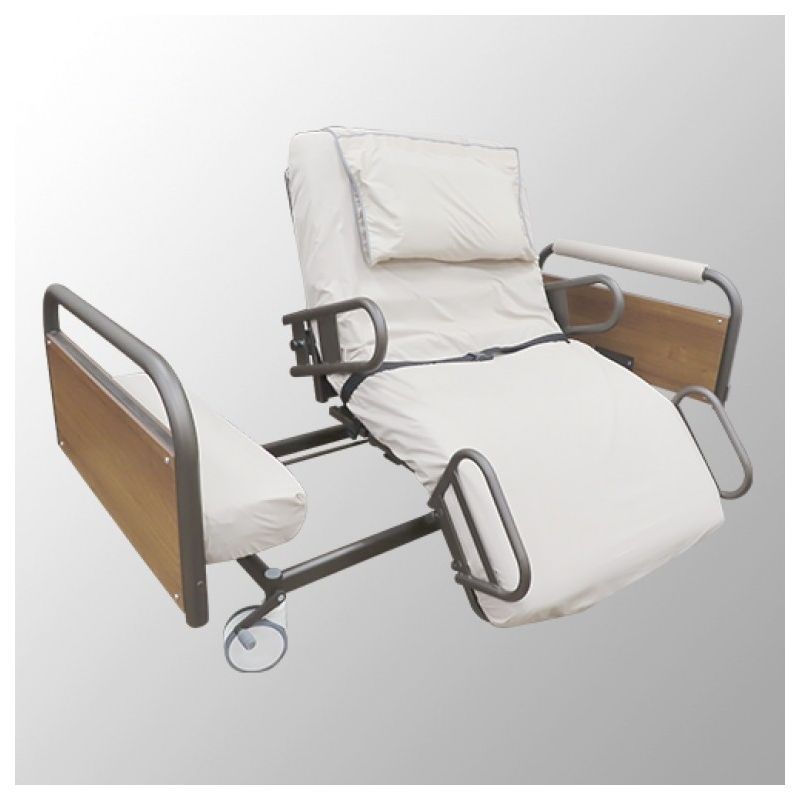
If difficulty getting into, out of or transferring from the bed is the primary reason you're shopping, our guide to the best beds for someone who has trouble getting in and out of bed explains how hi-low beds compare with Sit-to-Stand and rotating/easy-exit technology.
Start with the person's needs. Determine the required height range. Then choose the hi-low bed that best fits those requirements.


